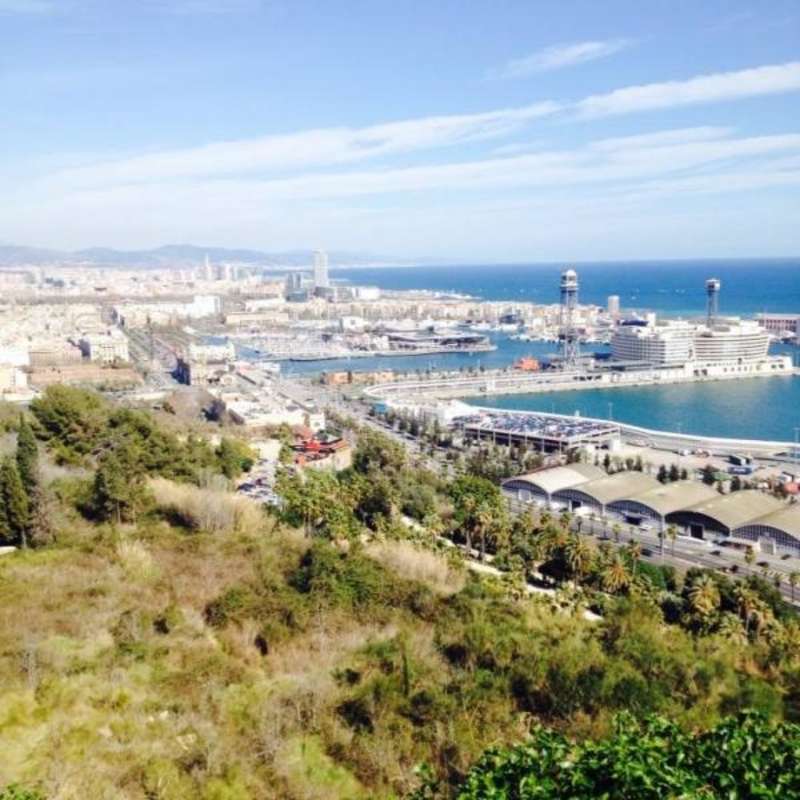
I arrived in Barcelona, Spain, three days before I was scheduled to meet my host family. I stayed in a hostel three blocks from Plaza de Catalunya, where I slept in the same clothes for three nights as I awaited the delivery of my delayed luggage and discussed language and traditional cultural practices with travelers from Germany, Japan, and Czech Republic. I explored the city on foot, something not too common in my home state of California.
After my stay at the hostel, I trekked a mile to the address of my host family, where Annika greeted me warmly and directly, like we had just reunited after a few years apart. She introduced me to her and her husband Tony's apartment, their massive pitbull/mastiff Ken, and my roommate for the next week, Tyler. She told me about Barcelona's energy and water shortage during the hot summer, and told me to be careful and conservative with the lights and water. This inspired me, and continues to affect my decisions today, because I have been privileged, along with most of the United States it seems, with seemingly unlimited water and energy. I took minute-long cold showers every day before leaving for school.
The day after settling in, I was escorted by Annika to a place where I would meet fellow students studying abroad and have a tour of the city and a chance to meet my peers. Over my one-month long stay, I went on many excursions with that group; some of them were guided by AIFS, and we went to see the old town of Girona, the breath-taking Sagrada Familia, and gather at a local studio to try Spanish wine and paint with our peers before we departed from this country. Through this connection by the program, I was invited by my friends to beautiful Tarragona, an amusement park atop Mount Tibidabo, and the amazing Parc Guell. At first I felt overwhelmed and alone in this astonishingly new and different environment, but AIFS excelled in providing many activities and bonding experiences where I could meet peers and make friends to share the adventure with. Additionally, the staff were incredibly friendly and welcoming, and I always felt safe and taken care of when they were with us. They gave us phone numbers to reach them, emergency numbers, briefings so that we were prepared to explore independently, and personal recommendations and advice accumulated from years of travel.
On that first day meeting my peers, we went together as a band of confused foreigners to buy Metro cards for the month of July. Taking the trains and buses around and trough the city was an amazing part of the trip. It felt liberating and exciting to travel anywhere in the city on the timely and expansive public transportation network and my squeaky and new Hoka tennis shoes. This experience gave me a new perspective on transportation, and since then I have been able to criticize the United States' dependence on cars and singular, inefficient transportation. Furthermore, using the train, which was strongly encouraged and maybe required by the program, allowed me to further immerse myself in the local culture; I people watched, rode to different neighborhoods, visited many beaches and art museums, and learned the city through careful study of the bus and train maps.
I took the train most weekdays to school. Classes were among the highlights of my trip. The campus was small and beautiful. The professors were fun and taught thorough and well rounded lessons on language and culture, and there was a cafe where the students and I would go on breaks to get coffee, pastries, fresh orange juice, and Bocadillos. I met many more friends in my Spanish class, and spent a lot of time with students from Germany, South Korea, China, and Ukraine. It was such a valuable and impactful experience to be able to talk with and laugh with these people from all over the world, and to share about our lives and countries and our experiences in Barcelona.
The food was incredible as well. My host family cooked amazing meals for me every weeknight: Tortilla, Paella, Patatas Bravas, fresh tomatoes drizzled in olive oil, ribs, fish, and many more amazing, fresh meals. There was never a meal without wine. We sipped Cava mostly, and on occasion they would bring out a Porron and Moscatel, a sweet desert wine and a vase to drink from. During these dinners, which were traditionally eaten around 10pm, we would discuss my classes, my adventures, global politics, stories from my hosts' lives, and many more enriching and lively conversations.