Vocational Impact
Why choose Vocational Impact?
At Vocational Impact, we combine global travel with purpose-driven work experience that makes a difference. As a not-for-profit affiliated with the UK charity Arms Around the Child, we send volunteers to join grassroots projects in Africa and India, working in psychology, mental health, criminology, law, medicine, and community development. You’ll be matched with inspiring local professionals, gain hands-on experience, and be part of projects that create lasting impact. Every placement is ethically designed, culturally immersive, and built on real community needs. You won’t just be observing—you’ll be contributing, learning, and growing in powerful ways. And the best part? Your time and programme fees go directly towards supporting the life-changing work happening on the ground.
Vocational Impact Reviews
Hear what past participants have to say about the programs
Overall Rating
Total Reviews
This experience was truly life-changing
May 26, 2026by: Heena - - United KingdomMy impressions of the foundation was mostly positive. There was some room for improvement but I was highly impressed by the work being done on the school and the farm. The plans for further development were promising and showcased the organization's commitment to enhancing the lives of the children and the community. I had the opportunity to engage in one-to-one counseling sessions with the children, which was an incredibly insightful and meaningful experience. These sessions allowed me to connect with the children on a deeper level and provided them with a safe space to express some of the emotional challenges and heartaches they had experienced. It was clear that these sessions were highly beneficial both for the children and for me as a volunteer.My time at your foundation was an incredibly fulfilling and heartwarming experience. I genuinely looked forward to each day spent with the kids, and it quickly became one of my favorite memories from this volunteering program. I was deeply touched by the children's gratitude and enthusiasm. My time in the health clinic had both positive and challenging aspects. While the nurses were friendly and welcoming, and I appreciated their willingness to explain the circumstances, I did feel that the clinic was somewhat unorganized. There were occasions when we found ourselves waiting with little to do. It was evident that the lack of patients was a contributing factor to this issue. During our time at the hospital, I noticed that we had the chance to interact more with patients, gaining valuable insights into mental health in Ghana. This experience was not only eye-opening but also instrumental in our understanding of the local mental health landscape. I had the opportunity to participate in the community health outreach program, and I must say it was my favorite part of the entire volunteering experience. Interacting with the local community, reaching out to individuals in need, and providing essential health services was incredibly rewarding. It allowed me to directly connect with the people we were there to serve and make a positive impact on their lives. I had the opportunity to participate in several outreach programs and field visits during my time in Ghana. The most educational and profoundly life-changing aspect of my volunteering experience was the time spent at the psychiatric hospital. Sitting in counseling sessions and witnessing the conditions and atmosphere within the wards gave me a true, unfiltered reflection of Ghana's mental health landscape. The educational value of this experience cannot be overstated; it provided me with valuable insights into the mental health challenges faced by the local population. It deepened my understanding of the intricacies of mental health in Ghana and the urgent need for improved mental health services and support. On a personal level, this experience was truly life-changing. It broadened my perspective, instilled a deep sense of empathy, and ignited a passion within me to contribute to mental health initiatives and advocacy. It was an experience that will stay with me, shaping my outlook and future endeavours in a profound way I strongly believe that my placement in Ghana will significantly benefit my ongoing studies and career progression. One of the most valuable takeaways from this experience is the unique perspective I've gained into multicultural mental health. This placement has equipped me with a deeper understanding of mental health challenges within a diverse cultural context. It has provided insights into the cultural factors that influence mental health, as well as the variations in approaches to treatment and support. This perspective will undoubtedly be a valuable asset in my ongoing studies and future career in psychology or related fields. As I pursue my studies and career, I can draw upon the cultural competence and awareness I've developed during my time in Ghana. It will enable me to provide more effective, culturally sensitive care and support to individuals from diverse backgrounds.
I loved working with the children and bonding with the amazing team.
May 26, 2026by: Micaela - - United StatesI completed clinic work, mural painting at the children's home, and leading a therapy session in the psychiatric hospital. Had 1:1 sessions as well with a few kids, and i would have loved more of that as well as group therapy time. I loved working with the children and bonding with the amazing team. It was a bit of a culture shock, especially experiencing cultural views around mental health. I got to do art therapy murals and counseling as well as psychoeducation - It helped me get my art therapy registration!
It is really so different from everything I have experienced before
May 26, 2026by: Caitlyn - - SingaporeMy first impression of the Foundation was that it was full of joy and love. For the most part, I got on well with the other volunteers. I interacted lots with the children at the foundation. Particularly, there was one day when we managed to speak to some children individually after reading their files -- this was a very interesting experience, and I wish I could have done more of this to give the children a listening ear. I hope I impacted the children positively. I also sat in on counselling sessions at the Psychiatric Hospital and went to the local hospitals, as well as the traditional hospital. Perhaps more could have been done to inform me of what exactly I would be doing at the hospitals and at Becky's, so that I could prepare more. It is really so different from everything I have experienced before, and I hope to be able to be involved in improving these systems somehow in the future.
It's an experience that will stick with you for your whole life.
May 02, 2026by: Dearla - - AlbaniaThe team was very nice. It was educational learning about and understanding how life was in Ghana and the reality in prisons. It gave me a broader perspective on criminology issues. At the weekends we went to Kakum National Park, The Castle in Cape Coast and explored Accra; on evenings we mainly relaxed. It's an experience that will stick with you for your whole life.
This placement has helped me so much with my future career
April 27, 2026by: Isabelle - - United KingdomAlthough some of the communication could have been better, I would definitely recommend this placement to my friends and university peers.I loved being at the foundation and spending time with the children. The children were very welcoming towards us and made us feel very comfortable. Some days were good in the clinics when we were at one of the hospitals because Alex talked us through his job and we discussed psychology and mental health issues with him. We did a presentation to a school the next day, it was terrifying but so rewarding. The most educational was the psychiatric hospital in Cape Coast, I learnt so much being there. When working there, I did counselling with patients. It was amazing and such good experience for my university degree. This placement has helped me so much with my future career getting to experience counselling for the first time as well as working with children and working in a hospital and a school.
I feel it has enabled me to develop my skills
April 24, 2026by: Lauren - - United KingdomI thought both the children's home and the hospitals were very interesting and insightful experiences. I loved meeting the children and this was defo one of the highlights for me as someone who has studied child psychology! I found the arrival quite a difficult process. In a new country after a long day of travelling, I found this quite overwhelming and intimidating, but overall I feel it has enabled me to develop my interpersonal skills with people with different cultural backgrounds, furthermore it has given me a wider perspective of the challenges faced with mental health in other countries.
It is nothing like one can experience in the UK
April 21, 2026by: Polly - - United KingdomSettling in was great as I knew exactly who to talk to if there were any issues. Myself and another volunteer had a fantastic welcome to the children's foundation. We were set with the task of counselling three children at the children's home. I always looked forward to the afternoons with the children. I feel I made an impact at the home and it was amazing to develop bonds with some of the kids. Ankaful psychiatric hospital is where we gained our most hands-on experience with psychiatric patients. I found the clinics so educational. I would say that, particularly due to the nature of this placement, and mental health awareness in Ghana, volunteers should be aware that there is a difference in approaches and there is some work to spread awareness of mental health topics, such as depression and anxiety. I think volunteers should be prepared to go in with an open mind and be encouraged to have the moto that "you get out what you put in" - so just don't hold back, say yes to everything (within reason) and go looking for experiences above and beyond. It is nothing like one can experience in the UK and just gives a fresh perspective on life. It has made me appreciate so much more of life.
Definitely some of the best moments I've had in my life.
March 27, 2026by: Lena - - GermanyThe accommodation was perfect, I have my own room, bathroom, the food served is delicious and I have my privacy which is always good. I found it very easy to settle in, everyone at the house is very open and welcoming. The house, room, food, area is perfect, the girls so welcoming, the children were wonderful, and I made friends with the other volunteer. The most educational was being at the hospital and getting lessons from doctors and going to the conference. The most life changing was the experience at SAPNA with the traumatized patients. I involved in lessons with doctors, seeing patients. I cultivated so much compassion, empathy, and understanding that this will definitely help me in my future profession. I will be able to have a better understanding of situations that I cannot directly relate to. It gives me understanding and perspective for things that are not my own. I understand hardship on a new level and this understanding creates empathy and this empathy can only be of benefit for a psychotherapist.
A transformative experience
October 29, 2025by: Talia Rabinowitz - United KingdomThis was a truly transformative experience. The work experience we did was extremely valuable, and I gained so much from it. It has contributed positively to my CV and career pathway. I had an amazing time, and always felt safe. Although we did run into some issues on the ground, the team were extremely communicative, and we were guided through them with lots of support. The charity work that vocational impact is supporting in Ghana was incredible, and it was so special to be a part of such an impactful charity. I loved spending time in the amazing country that is Ghana!
Eye-opening and educational experience in Ghana!
May 27, 2025by: Max Bowen - United KingdomVolunteering in Ghana was a unique and eye-opening experience that offered me both personal and professional growth. From the moment I arrived, I felt welcomed by both the locals and the staff on my programmee. Working with such a small, dedicated team impressed me, and I was able to learn a lot about the justice system through hands-on experiences. I particularly enjoyed the field trips, which included visits to four prisons, discussions with lawyers, and insightful briefings with police officers. These experiences allowed me to deeply engage with the criminal justice system in Ghana and compare it to the UK. The placement not only broadened my understanding of global justice issues but also helped me develop practical employability skills. I participated in the production of documentaries highlighting prisoners’ stories, which was both eye-opening and educational. Outside of work, I explored the beautiful country, visiting national landmarks and meeting welcoming people, which made my time in Ghana unforgettable.

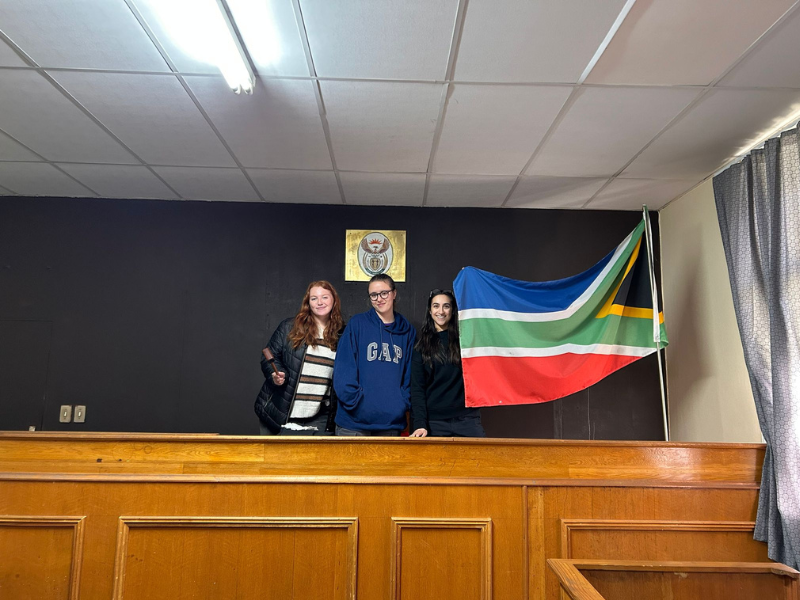
Being given access to the front seat in the court was such an experience
February 27, 2020by: Molly DauntProgram: Psychology and Criminology Programme in South Africa
We spoke with fourth-year Oxford University Classics student Molly after she returned from volunteering with Operation Bobbi Bear in South Africa. Molly described for us what a typical day at the centre which deals with young victims of sexual abuse was like. “All the volunteers would get up quite early to get the children up out of bed, change nappies and get everyone off to school. There was always at least one other person in the house helping us out in the mornings because it was a little chaotic. We’d have a bit of time to have breakfast ourselves and then around 8:30 we’d get picked up. Shadowing Mildred was the best. We’d go around the police stations and courts and basically just helped out with whatever she was doing. We’d normally get back around 5 pm and look after the kids when they came home from schools and do bath times and homework and play with them and then they’d be in bed by eight.” VISITING LAW COURTS “That was pretty incredible, I loved court stuff. Before I went to the courts I did talks in schools and we had so many girls come up and give their statements to us so we knew what happens initially when a case opens so we knew that part but we didn’t know how it ended or where it went from there. Going to the court was the perfect follow up to that. The one we went to was in Zulu so I didn’t really understand that much what was going on but it was a trial of a man who had been accused of rape and it turned out he knew the victim so it goes quite intense. He was let out on bail. It was really interesting but also a really harrowing moment in the two weeks because it showed how people fell through the cracks in that he was allowed to walk free. That was pretty hard. All of the pretty difficult stuff was made better by having Mildred with us. The judge stuff and the law stuff felt pretty depressing at times. Being given access to the front seat in the court was such an experience, they’re quite small so you’re right in the middle of it and Mildred is such a big figure that you get in all the interesting situations.” WORKING WITH LOCAL STAFF “I’m slightly in love with her, she’s so kind and kind of encompassed all the right ways to do charity work, she wasn’t jaded but she knew the realities. She did everything in such a warm way. We followed her around and she just had everybody. The head of the police force and the main lawyer were calling her all the time asking for help because she has such an authority on everything. She doesn’t stop, she spends the day campaigning for people’s rights and then she goes home to the 23 children she’s taken in. Probably one of the most impressive people that I’ve ever met. She was the perfect example of someone who can break the cycle of abuse.” TOPICAL TALKS AT LOCAL SCHOOLS “That was really fun. It was nice having the other volunteers at that point because I’m not a massive fan of public speaking but it was actually so relaxed. It was quite cool because they were so responsive to what we were saying and so happy that we’d come all this way to talk to them, they wanted to speak to us the whole time afterwards, they really wanted to engage with us. We were talking about some quite intense stuff with such young children. You find such points of similarity with them you can speak about personal things with them so comfortably. It was a very good way of showing how much abuse and how much crime was going on because after the talks we would hold a drop-in session but we had up to 15-20 children coming in and making statements and reporting things.” OUTREACH PROGRAMMES IN THE COMMUNITY “That was incredible. We had a day there. It was me and Jacky doing the first aid stall and we had a stream of children for about an hour and they were all so malnourished and beaten and had terrible sores so that was the first time I saw how bad the problem was. The second time I went to the Tree they did a Zulu ceremony where they give you your name and that was really lovely and you meet everyone and that was the day before I left so it was a good ending.” MOST POWERFUL MOMENTS “Just sitting outside the first time we went to the school with some kids I was talking about my sister who was their age and they all wanted to see photos and we were just speaking and earning their trust and then they all gave their statements and we wrote them down. That was the first time we really connected with the victims and found out so much about their lives and having to write out these quite horrible statements. It was quite touching but also quite upsetting. On my final night, one of the boys had such terrible social anxiety that he was vomiting with fear before school and it was really hard for him to open up and wouldn’t show any affection. He took me upstairs on the last night and wanted me to put him to bed. He’d never really shown any affection to his siblings but that night he tucked them all in and then he made me pray with him and made me make a list of all the things that I was happy for and he basically prayed for me to God and it was so unbelievably touching, him listing all the things he was happy for. It was such a step for him wanting affection, it was a big turnaround for him. It was nice as it was just as I left. They all became such different people in the two weeks I was there. They all changed so much which was so amazing, a lot of powerful moments like that.” EXPECTATIONS BEFORE DEPARTURE “I was actually really nervous. I thought it was going to be really hard and it was all the things that I expected, it was really intense, but I hadn’t realised the comfort of being around really good people and people who are really good at their jobs and how I remember thinking about an hour after I arrived that I felt very comfortable. I don’t think having the kids there made a big impact because that’s something I didn’t know was happening. It felt like a house full of children so you just got stuck in and children are so easy to feel comfortable around so that was a really nice aspect that was so warm and lovely. We were immediately thrown into a lovely funny situation with these six really sweet kids. Equally, I didn’t expect to be so right in the thick of it and not quite knowing what to do with some of them. I can’t imagine going back without them. It was constant, we were fully immersed from start to finish. The relationships with them was the nicest part of it completely. I really miss them. One thing I did expect was the cultural divide between Zulu and Afrikaans. We talked a lot about the stigma of rape in Zulu culture and how that maybe got in the way of trying to help people. That came up in our training session right at the start and I’m glad it did because for the next two weeks I was always kinda aware of it. It would have been quite easy to offend someone by not taking in mind the differences in the culture.” REFLECTIONS ON THE VOLUNTEER EXPERIENCE “I feel weird because I haven’t talked to many people back here who aren’t family because it sounds so cheesy in a way. It’s been quite difficult coming home and trying to get back to normality. It’s been hard to take my exams seriously now. It’s been part of my decision for next year. I’ve been in these rigid academic institutions for so long and haven’t had a chance to take a breath and think about what I want to do and so this is the perfect way to completely disconnect so I spend two weeks doing something completely incredible and getting so much satisfaction out it that it made me think about all the academic stuff completely differently. It really shifted my decisions for next year, before I was going to go straight into a masters but now I think I’m going to take a year out and at least do two months of overseas charity work. I worked that out while I was out there. Because it was so different from what I’d done before it completely re-shifted the way I want to do the next few years of my life.” IN SUMMARY “A good mix between being compassionate and being invested in every single child’s interest but it also had that unity of a very strong charity. They had that thing of being cogs in a machine and working very effectively so it was a very good mix of being deeply personal but it also functioned very well day-to-day. The overriding feeling, I got was how much people cared. There were people openly crying about situations but also working on them for hours and hours, day after day, so that nice thing of not being jaded by these situations. It never felt hopeless, just quite extreme. You have to come to terms with the situation quite quickly and just get on and do the job.”

We observed play therapy and so much more
February 27, 2020by: Nele GewertProgram: Psychology and Mental Health Programme in South Africa
We caught up with Bath University second-year psychology student Nele, on her return from volunteering at Nkosi’s Haven in South Africa over the summer. “I really enjoyed it and I was completely involved in it. I believe I made the most out of it because I ended up tking over the baby day-care for two or three weeks and I offered to help with CV and job applications for the mums, and that was all taken on really really well, everyone was really happy with that." “I had quite a lot to do, there were different ways to handle the whole situation. I went with a ‘I can’ attitude, which gave me the motivation to find something to do that would benefit both sides. “We observed play therapy which actually happened with one of the kids that I had in day-care which was incredibly interesting and I really enjoyed it, I genuinely thought I got a lot out of it and I was very sad to leave in the end." Nele was able to work with other volunteers in creating a workshop for the children at the centre: “We did a workshop on sexuality and transgender themes with the teenagers. One of them even came up and asked questions afterwards. They wanted us to go talk to the mums and even thought it was such a zero-tolerance society. The people were great, the kids were great." Nele was also able to go outside of Nkosi’s Haven to see how other NGOs function in the country; We organised and went to a creche in Soweto so we made use of the time and we explored South Africa and Johannesburg, it was a great experience and I loved every second of it. The day trips were a great idea, every time we did one I had an amazing time. Gail organised for us to see the Teddy Bear Clinic which was incredibly interesting and it was really nice to see how other organisations in South Africa work. “Gail is one of the most hardworking women I have ever met, everyone knew who she was. I was really really attached to the kids and loved building something that will last.” “It was great to see that we are working for a cause that was so useful and well known." I think psychology can be involved under very specific circumstances, we’ve seen the places that Nkosi’s works with, which could definitely involve psychology aspects like, life skills workshops and psychology workshops. We suggested things like movie nights and dance nights to help boost the children’s self-esteem. There is also opportunity to participate in play and art therapy. “I cried when I left, it really is what you make of it. I loved working for a project that is doing such good work in the community”

It changed me as a person. You never forget the stories and experience
February 27, 2020by: Emily MooreProgram: Psychology and Mental Health Programme in South Africa
We caught up with one of our volunteers to Operation Bobbi Bear, second-year Leeds University, psychology student Emily Moore Emily explained that Bobbi Bear is a centre based in Durban for young victims of sexual abuse, in which volunteers helped the children with their pre and post-school routines whilst simultaneously helping with the local community. "The most amazing trip ever." Emily described it as “the most amazing trip ever.” She went to Bobbi Bear for three weeks. When we asked about her impressions of the centre itself, she said; “it might seem daunting at first but they’re so welcoming. Their work is tied mainly around sexual abuse and working with children, but they are such a huge part of the community, everyone comes to Bobbi Bear even if they’re not in the centre.” Emily recalls one incident specifically: “we worked with a couple whose child Bobbi Bear had helped, and even though it had all been sorted, they had kept up the association with them to help them get over drug addiction. They were such a nice couple and Bobbi Bear wanted to try to get them to rehab even though it’s not their specialisation. It happened and they even paid for them to go. It was really amazing. That’s one of my highlights, I think. I would say that there are so many different things to experience. It’s not just children, they get you involved in everything and you’ll always feel a part of the team, you feel like you’re a top priority to them, it’s really special.” ″You'll always feel a part of the team, you feel like you're a top priority to them, it's really special." Operation Bobbi Bear, High Court Visit, Psychology Placement, South Africa, Vocational Impact “You'd either travel to different centres or courts, hospitals and schools." When asked to describe a typical day during her trip Emily said, “it’s actually really hard to describe because there are no typical days as such. The craziest things happen every day. We lived at the Bobbi Bear House, which is the main rescue centre, so towards the end, we had six kids living with us so we would wake up to screaming children in the morning. We’d go down and everybody would already be there. It was very chill, it was very relaxed really, we’d go to the office and chat about the day ahead. Then it depended on the day, you’d either travel to different centres or courts, hospitals and schools. Towards the end, we just spent a lot of time in the house looking after the kids.” “They didn't know what a pillow was. They couldn't believe that a toilet flushed, they didn't know what toilet roll was." Emily was able to see one of the largest abuse cases Bobbi Bear had ever seen. The children arrived at the centre from the extremely poor conditions in which they had been staying previously. “They were in the most awful conditions, we needed to get them into the Bobbi Bear house. When we first arrived, they didn’t know what a pillow was, they just didn’t get it. They just couldn’t believe that a toilet flushed, they didn’t know what toilet roll was, it was really sad and it put everything into perspective for me. When I first heard they were coming I was so happy. They were the best part of the trip, it was stressful but I didn’t care. I just wanted to do whatever I could to help. That last week, it was like 24-hour care, that was the best thing because we really felt we made a difference. The six kids were a massive part of our trip.” “You wouldn't get that experience here in the UK" When we asked Emily to highlight some more memorable aspects of her stay, she said; “I think for me it was the courts, they were so interesting. It was so shocking really to be in that environment, it was so strange, the lawyers were just chatting with each other, everything was just so laid back. It’s just such a difficult situation, but it was fascinating really. You would never get that experience here in the UK. One hugely powerful moment for me was when this guy was sentenced to like 200 years in prison for rape and murder. All the victims and family and friends all burst into tears and were so happy, and when outside they chanted and sung Zulu songs, it was such a powerful moment. You could see the hurt that they had all experienced from this one man. We also went to police stations and talked to them about doing talks in schools. The police spoke about past talks and how successful they were. They had a lot of success stories about action happening after their talks because from that point the children would be educated about what rape was whereas before they wouldn’t have been.” “Working to uplift the country and sort out corruption in the police and court system" We asked Emily about her expectations before the trip and she said; “I feel like I wasn’t nervous until I got off the plane, but then it was very daunting. There was a culture shock as well. I didn’t go in having expectations as such, I just went in looking to see what it was like there. I would say I was really overwhelmed by how welcoming they were, they made you feel so relaxed and at ease, they were always there for us and it really felt like they wanted us there.” Emily said her impressions of South Africa were, “shocking, some areas were so backwards, but there were so many amazing people working at Bobbi Bear and the community. It’s really amazing to see how many South African people are working to uplift the country and sort out corruption in the police and the court system, it seems like they are working towards the right way to fix things.” “There was a focus on uplifting mothers and women, educate women and promote women's rights" Having mentioned uplifting, Emily spoke about the efforts made by women to educate other women and promote things like women’s rights at a help centre called the Tree. “There was a focus on uplifting mothers and women. In South Africa, there’s such a big focus on HIV and AIDS which Bobbi Bear has done so well in bringing attention to. Everyone knows what HIV is, the next step is women’s violence. People travel two and a half hours on foot to be there, one or twice a week, it was about the women uplifting themselves. Kids would come and get food and clothes donations there as well. We went twice and played with all the kids with hula hoops and balls and stuff like that. I met Jackie Branfield there, she was such an amazing woman, she made us feel so so welcome, she even said she had a psychologist on hand if we had been affected by what we were doing. She explained to all the Zulu ladies who we were, saying that we’d paid to come out there to help the community, got us to do a presentation on who we were and why we were there. They just make you really get involved and you’re never just watching, you’re always interacting. It was such an amazing experience. We also met this Zulu lady who sung in the most powerful voice and only after did we find out that she only had days to live, that was a powerful moment.” "It changed me as a person. You never forget the stories and the experience." Emily said that the experience had helped her clarify her career path. “I think I always wanted to work with children, especially in clinical psychology. I think it’s been confirmed that I really like working with children, I find it easier to talk to a child than an adult. Even when there’s a language barrier, I can play and use my initiative to interact with them, it’s just so easy. I’d love to work with children in an environment like that, where it’s so useful for mental health issues. I think it changed me as a person. It sounds cliché, but you never forget the stories and the experience, you don’t feel like you want to go back to your old lifestyle, it’s so hard to accept that that is their lifestyle. I’m already looking at what else I can do and I’m keeping in touch with Bobbi Bear. Once or twice a year we want to do something to raise money to send them.” “There are a lot of projects around the world but this one you get so involved. It's a particularly good placement I think" Finally, when asked if she would recommend the experience to others Emily said; “definitely, I made an Instagram account and we got all our friends to follow that and the number of messages I got was great, I told them all to get in touch with Vocational Impact. There are a lot of projects around the world but with this one, you get so involved in so many different avenues, so many projects when you’re there, it’s a particularly good one I think.”
I was immediately at home, I always felt like I was wanted there
February 27, 2020by: Ryan SmithWe recently had a chat with Ryan, who volunteered at Nkosi’s Haven for a month. Ryan had worked in business development for several charitable organisations, including Broadway Cares/Equity Fights AIDS, which has a strong relationship to Nkosi’s Haven. This helped him get involved as a volunteer and put his experience as a fundraiser to use at the project centre. As he explains: “Broadway Cares / Equity Fights AIDS is the fundraising arm of the Broadway industry and community. Each year, they raise close to $20 million, mostly through fundraisers and donations related to the Broadway shows.” The money is then granted out to AIDS service organisations, mostly in the US, but they do have a very special grant category that goes to South Africa. That’s because the Lion King is one of the longest running Broadway shows, it’s phenomenal, and a huge number of the actors in the show and the dancers come from South Africa. “The Lion King also helps raise millions and millions of dollars for Broadway Cares. So, years and years ago, they decided it was only right and only fair that a considerable amount of money be given back to NGOs in South Africa. They have about 20 different grantees in South Africa that get money from Broadway Cares. Nikosi’s Haven is one of the most well-known, most beloved ones, and for good reason. It’s got heart.” “There's a lot of need there, and I think they look towards volunteers as being able to temporarily fill those needs, whether it's something as simple as attention, or playing with kids, or tutoring them, or even better, just bringing special skills to improve their lives, like business marketing to help the organisation grow. I was immediately at home, I always felt like I was wanted there." “So when I was travelling, I decided I wanted to spend about a month volunteering. Nikosi’s Haven came to mind, so I got in touch with Vocational Impact and they welcomed me with open arms.” “I was pretty clear on what I wanted to do, I said : I have this fundraising and business experience and with your permission I'd like to help you with whatever fundraising programmes you have or if you don't have any we can talk about starting one up" “I arrived with some idea of how I wanted to help, and instantly helped Gail create a direct mail campaign to their existing donors.” “We also built something called Nikosi’s Angels, which is a programme for people to give at a moderate level and become Angels. In the evenings, I spent about two hours doing tutoring with some of the older kids.” While Ryan was discussing his work, he also mentioned the freedom the project offers volunteers: “ It's up to each volunteer to really take initiative and create whatever you want to create. if you want to get behind social media, or compliance and policy then there is an opportunity for you. If you want to help with fundraising and corporate CSR, then jump right in." As we all know, no volunteer opportunity is perfect. Ryan also informed us of one of the more difficult aspects of volunteering at Nkosi’s Haven. “When they’re on campus, it can feel a little isolating because you don’t have a car there. You can get Uber, and I would recommend getting Uber so you can take it to the nearest mall if you just need a break. But I was so busy with helping that I got stuck right in and the time actually went by really quickly.” However, at the end of the day, Ryan said what made the Haven the perfect fit for him was how he immediately felt at home “I was in touch with Vocational Impact just by email for a month and a half or two months before I went. They prepared me with documents and background information. This meant I could make a start almost instantly. Everyone who walks in those doors is fully embraced by everyone, by the students, by the kids, by the staff.” “I arrived and there was lunch set up for me, and then they took me around on a tour of the place. I think it's hard for anyone to show up there and not get this overwhelming sense of love and community, you're just embraced".
I want to go back!
February 27, 2020by: Jamie JamesJamie, an aspiring nurse, spent four weeks volunteering in Ghana. Here, she tells her story of working side-by-side with the community of Senya-Beraku, an experience which not only influenced her career path but also had a major impact on her view of life. What did your volunteer work consist of? We went to the project in the morning and helped where they needed us. While we were at there, we would help clean it, so we would sweep, mop, and wipe the windows. We would also play with the kids and give them the love and affection they needed, and a bit more of that kind of attention. When we were done, we could go back to the volunteer house and do whatever we liked. On one of the last days, we even took the day off to go to the beach. I also did a bit of teaching there while I was there; just a math class. Whatever you’re capable of doing, you can do it if you’re comfortable with it. A girl I was volunteering with was from Mexico and she did some of the English classes with the Grade 1s. We also played with the kids at the daycare; that was tiring though! What were your expectations before starting? Did these match up to your experience when you had finished? I think my expectation before I started was that I wanted to feel that I made a difference somehow in the kids life. I don’t know if they matched up to my expectations because I found that when you’re only there for such a short amount of time you can’t really make that much of a difference. It does help to have that extra attention and support there, but at the same time, the kids need more long-term relationships. It’s always hard when you leave because you can see that they’re sad. However, I’d say expectation wise, it kind of exceeded them because I saw more of a change in myself through them. Can you describe that change in yourself? I’m in nursing school and one of the things I wanted to do with my nursing degree was work for Nurses without Borders and help people in developing countries. I feel like there’s a lot of people in western cultures that want to create a lifestyle similar to their own in these developing countries, but I find that’s not what they need. The people more so just need things like clean water, road construction, and improved healthcare and education systems, and I think that’s what the real focus is and the focus isn’t on them having flat screen TVs and things like that. So I would say the change in myself was that it made me focus less on the materialistic things I need in my life and more on creating connections with people. I found that I didn’t even want to come home because the people there were so much happier and more joyful and more welcoming than people here who have so much more. So I would say that was one of the things that changed, and also just a change in what I want to do in my career. So do you still want to be a nurse? Yeah, I’m going into my fourth year as a nurse, it’s just more so what I want to do when I’m done. So how did this experience impact your career path? And would you say it’s helped in your schooling and career at all? Yeah, I would say it helped. It does look kind of good on a CV, in the sense that I’ve been to a country like that and done some work. I found that it also helps direct me in the way that I interact with my patients and it gave me a more of a clear idea of where I want to work and that kind of thing. When I’m done with school, I probably need to gather all of my skills in Canada and get that all figured out, but I do still want to work somewhere like Ghana that needs that extra assistance, and I’ll be able to stay for longer periods of time. So why should someone choose to volunteer in Ghana over somewhere else? I haven’t been anywhere else, so I’m not 100% sure. But Ghana is a mostly English-speaking country, so that provides one less barrier. You also just feel safe there. Like my mom was always texting me asking if I was ok and I was like, I’m not texting you because I literally feel so safe that I feel no need to let you know how I’m doing. Me and the other volunteers (there were nine girls in the house), went on adventures on our own too, and throughout that whole time, there was never a time where I felt unsafe. So I think that was one of the greatest things. And the people there are just so warm and so welcoming, I always tell people they should go to Ghana. So did you get to explore Ghana at all? Yeah! So the first week as volunteers, we got to go to Cape Coast. We took this big bus, so we all met up, drove to Cape Coast, and stayed at a hostel for the night. While we were there, we got to go on a canopy walk, which was really cool, and we got to go to the castle and learn a lot about slavery. We also had our own time to explore around, so some of us went down and got street food or went to the little shops and stuff and brought people’s artwork. There was a little club thing there, so there was music and dancing at night. We also got to interact a lot with the locals that day. The second weekend we went to Wli, where there are waterfalls. It took us so long to get there, about nine and a half hours. I think it was three tro tros and one taxi, and there were nine of us in this one taxi! So we all piled in and we went to these waterfalls and stayed at another hostel. We went hiking the next day and then we came back. It was really nice. On the way back, our tro tro driver had bread, and he did a baboon call and all these baboons came and he fed them the bread, so it was pretty cool to see that too. So yeah, we got to explore a bit and interact with the locals. What would you say was the most impactful moment from your volunteer experience overall? I don’t know that I could say there was one single moment that was most impactful…I think just the whole trip! I came back and people would ask me how it was and I just said it was amazing because I couldn’t sum up everything – my thoughts were so jumbled. I said to the girls that it’s amazing how many memories we packed into a two week span. So maybe I would just say the thing that I took away the most was trying to bring that sense of human connection that they have over here to Canada. I find that everyone there lives so simply but so happily. I’m trying to bring that joy and what I learned there back here to share with people. Also, just the love and the kindness from the kids, and their openness, because they’re so welcoming. They don’t even know you, and the first time they see you they run up to you and give you a hug. So probably that. It was amazing how in two weeks, you develop these relationships with these kids. I want to go back so bad; if I could I’d be back this summer 100%.

We were very lucky to find Vocational Impact
February 27, 2020by: Alex McGarryMeet Alex, a student studying to be a nurse who volunteered with our project in Ghana for two weeks. Alex and her friend Lora volunteered through the Vocational Impact medical placement and worked at the clinic in Senya-Beraku, where Alex worked in the maternity ward and Lora worked with mental health. Alex had done some travelling before, but told us that her experience in Ghana was unlike anything she’d ever done before. This trip was particularly special for Alex, because this is the type of work she wants to continue doing once she finishes her degree. Alex started by telling us about a typical day of volunteering “We’d wake up at about seven, and they come with breakfast anywhere between six and half seven, so you sort of have to be up. The first day we got to the clinic for quarter to eight, but they weren’t really doing anything because they don’t really pick up the pace until half past eight, because they do a big worship all together.” The clinic lead then decided where they needed us to go with the clinic lead. Lauren took a real interest in the mental health side, whereas I'm a lot more clinical with what I enjoy, so I spent a lot of time with midwifery and I really liked that there. “I got to see a lot and get involved in a lot of varied stuff. We’d do that and then we’d head back home at around twelve for lunch. By the time we finished lunch, we’d go back up to the clinic. They’d be winding down, they seem to close up about two, and then everyone’s gone. As school finished, then we’d go up to the children’s home for the afternoon. That was really good, we really liked doing that spending time with the kids up there. And I think it broke up the day a bit so we weren’t always doing the same thing.” What happens when someone comes into the clinic? The volunteers witnessed a man who had been run over and had really bad skin abrasions that were treated but because the clinic did not have an x-ray machine, the patient was sent on his way after his cuts were cleaned up If you don’t have medical insurance the patients won’t get treated The nurses at the clinic get paid a fair wage for their job in comparison to the amount needed to live in Ghana In the NHS you have a mattress with a cover that you wipe down after every patient, in Ghana they only have foam beds where infection control is not their top priority. Since Alex and Lora went to Ghana for their medical elective, we were interested in hearing more about their work in the clinic “I spent a lot of time in the maternity ward. We spent two days weighing the babies and making notes like that, and then an entire day doing the registration of them and registering them online. Lots of vaccinating the babies and the mums when they come in, and checking up on bumps and things.” “We did a day in vitals at the wound care, and seeing how they handle things. And then we went to labs, and that was really interesting, seeing how they check for malaria and tetanus.” We did loads, they really do take you on an and throw you into the deep end. “With the deliveries, we watched one and then I watched another, and then for the next one, they were like, “alright, you do it and we’ll guide you”. “They’re all so lovely at the clinic, they do all want to help you. And they want you to stay for as long as you can, because I think they like the extra pair of hands there.” “There’s not many places in the clinic, so we tried everything. We were comfortable enough to go and do our own thing. Laura was ok with going off with mental health and I was ok with going off with midwife, and we didn’t feel like we needed to be attached at the hip. And then we’d see each other in the evening and catch up.” We dealt with hundreds of babies whilst in Ghana They weighed the babies to monitor their progression The midwives were quite strict about babies losing weight and make sure the mothers are taking care of them properly The student nurses were there to support the midwives Alex and Lora are both studying nursing at the University of East Anglia university, so we wanted to hear a bit about how this experience related to Alex’s career plans and her studies: “When I’m qualified, this is what I want to do. I want to go out and carry on this sort of thing. So for me, it was ideal going and making sure it was what I wanted to still do, because I thought “well if I go out and hate it, then there’s no point in me finishing my degree”. But luckily I really enjoyed it.” “We’re in the middle of our degree right now, and you’re at the point where you’re run down and don’t want to do anymore. We went to Ghana and I think it’s given me a lot of motivation to finish.” For me, when I do apply for permanent jobs doing this sort of thing, I'll have experience, which will be really helpful for me. We were also so happy to hear that Alex would recommend volunteering in Ghana to a friend. It exceeded our expectations “Especially for Lora, she was really really nervous about going, and I was nervous too. We didn’t really know what it was going to be like. I was worried we would feel quite nervous about being on our own in the house with someone we didn’t know, but we felt safe. And the clinic really got you involved and you were quite independent. I thought it would be a lot of shadowing, but it was a lot of independence. We really loved it. We really enjoyed the independence. It’s quite nice when they give you things to do. We felt like we had actually given a hand and been helpful” We met other people from other organisations and realised how lucky we had been to find Vocational Impact. People were paying huge amounts of money and not getting nowhere near what we were getting.

It has given me vital experience I can use when applying for my PGCE
February 27, 2020by: Ashley. smith - United KingdomI couldn’t recommend the Vocational Impact placement enough. It has given me vital experience I can use when applying for my PGCE as I want to be a PE teacher after uni. Doing something like this will make me stand out and I’ll be able to give practical examples of when I overcame sports related challenges - Ashley, Sports Management & Development, Portsmouth University

Gathered working experience that helped me find my first job back home
February 27, 2020by: Jacob Squires - United Kingdom"Vocational Impact really helped set up my placement and tailored the topics to my specific degree requirements. No other volunteer organization provides this level of support." See below the different tasks you can get involved with. Get in touch with Vocational Impact and they provide all the support you need. Not to be missed! a) Develop a template to track financial situation & received funds. How can this inform future revenue predictions? b) Create a template for their yearly annual plan that can be used in the future, and complete 2019. c) Evaluation and risk management. How we can measure both? d) Assist with policy design by department - They have very basic ones and there’s an opportunity to add or ‘re-design’ e) Identify a business problem and craft a plan to solve this problem. Act as a consultant. f) Develop a plan to increase donors for the charity through fundraising. Document progress, challenges and plan of action. g) Create a plan to find new corporate partners. How do you make that connection with corporates and start accessing CSR budgets? h) Getting all compliant ready. One of the main challenges of starting new corporate relationships, where there is a high emphasis on compliance, is international charities are really struggling to keep up with compliance demands. i) Develop a centralised data system for monitoring, evaluating & information storage. This will include a list of policies, compliance, contacts, processes, action plans… so information can be drawn easily. j) Design performance and evaluation documentation for staff k) Workable Programmes for children during the holidays (i.e. based on budgets) and bearing in mind that the caregivers are not the most creative and energetic.

I couldn’t recommend the Vocational Impact placement enough
February 26, 2020by: Dan DrugmoreProgram: Psychology and Criminology Programme in South Africa
We didn’t stop during our trip. We sat down with the founders and established our shooting schedule. From that moment it was go-go-go. We should have gone for longer, but being guided around India with our local host meant we could get shots that we could never have done on our own. You can watch the top selection of photos I did on this project on their website.

This was my first time volunteering abroad. It was really eye-opening
February 14, 2020by: Lola Curtis - United KingdomProgram: Psychology and Criminology Programme in South Africa
Second-year UWE Early Childhood student and volunteer Lola Curtis spent her August volunteer placement month at Operation Bobbi Bear; a centre for children who have been sexually abused, located in Kingsburgh, South Africa. Lola describes the centre as being a place that liaises with everyone in the community without leaving anyone out. As Lola put it, “whether it be a family or a single child, everyone is included. Everyone who works there is amazing.” We asked Lola to describe a typical day during her month. “I was probably out with the police about 80% of the time, visiting schools and performing talks and events which had been organised with them. We’d typically present serious issues such as child abuse. Because we were foreigners instead of their usual teachers, the children really listened to us and we found ourselves to be pretty popular with them. I think it was a great way to get children to listen to important issues.” She would join the police early in the morning and quickly got to know the local officers, letting them know that drugs were a problem just in South Africa but the UK as well helped to build common ground between them. Lola was able to tour local police facilities and then taken to schools to do a presentation in front of the students. “My biggest audience was probably around 1000 or so children, it was a pretty big school.” By following the lead of the other volunteers and conducting her own research Lola found herself quickly able to address such audiences in her stride. When asked about other notable experiences during her time, she reels them off; “we were asked to be judges at a police event which involved children from four of five schools competing to become ‘Station Commanders’ by helping the police from inside a school. I also got to help a 19-year-old student called Michael who had dropped out of school but now really wanted to continue to learn, that was a really touching experience. We also helped with phycologist reports on the children and were trusted by the staff to contribute because we were in such close proximity with the children. When I was leaving, I was completely overshadowed because they had found a baby on the street, but I think that was a more important matter, but it serves to illustrate the kind of amazing work that gets done by places like this.” Helping out at the Bobbi Bear Centre made up the mornings and evenings of Lola’s day. “It was overwhelming at times, but I like children and I get on well with them so I didn’t have a problem. We’d help with their pre-school needs and then in the evening help with feedings, bathing and bedtime routines. These were some really challenging children, but it was very rewarding to work so closely with them.” When we asked her about her previous experiences Lola said “this was my first time volunteering abroad. It was really eye-opening, but I followed Operation Bobbi Bear on their Facebook page and I’d been in contact with them so I knew what to expect, plus Vocational Impact helped me every step of the way. Touring the schools I found it so inspiring that despite the hardship of the conditions they faced they’d done an amazing job of making do with what they had for their students.” Lola describes visiting the Blue Roof, a youth centre in a nearby township; “it was amazing, we don’t have anything like it in the UK. I think it was pretty new. It offered career and interview advice to teens and was open to the whole community. It had this amazing screen and headphone tree that gave advice on careers and when we visited, they had an art station set up with some of the older teens painting a mural on the floor.” Being able to see the side of South Africa that man foreign visitors choose not to see Lola says, “it really helped me to understand the situations that many of the children found themselves in. The one thing I did have to get used to was the timekeeping, someone summed it up as ‘go with the flow’ which is quite different to what we have in the UK. I think he had one event due to start at 9 but we ended up doing it at 11:30.” When asked about the most positive aspects of the trip Lola said “it was great to meet so many amazing people, it’s definitely impacted on my future plans, in many ways it sorted it all out when it came to narrowing down my choices for the future. I’d love to work towards a masters in social care, the CSO’s at Bobbi Bear were such an inspiration. I think Bobbi Bear is a great addition to have on an application to that sort of work. To be honest, I’ve been telling all my friends at UWE to go and volunteer, I won’t shut up about it.” Lola managed to raise half her volunteering costs herself through “mainly cake sales and social media spamming, half was my target so I’m pretty happy about that. I think next time I’d like to aim higher. Overall it was a great experience and I still keep in touch with my fellow volunteers. I was shown a video just this morning of a boy who had never said ‘thank you’ before saying it for the first time, which was so heartwarming to see.”
We planned workshops
February 14, 2020by: Sophie BaronProgram: Psychology and Mental Health Programme in South Africa
We spoke with York University third-year psychology student Sophie, on her return from volunteering at Nkosi’s Haven in South Africa for three weeks, working primarily with young children, but also older teens. We asked Sophie what a typical day at Nkosi’s Haven was like. “We would wake up and go to the day-to-day care centre from 9 to about half 12, there would just be a different activity each day with the little ones. We’d make sure they got fruit and had a lot of naps, and then after that, it would be a half hour break until lunch time. The kids start getting back from school around three and do homework, so we helped with that. In the evenings after dinner, we sat with the older ones and helped with the harder homework and helped with CV’s. They all wanted to go to university so we talked with them about that, we definitely felt connected to the older teenagers. It’s a nice place and all the kids and people are very friendly, everyone’s happy and say hello to you as you walk past.” Sophie was hoping to be able to use her psychological expertise during her trip and was able to create a workshop for older students. “We couldn’t really do a lot directly because we weren’t qualified therapy wise. “We planned a couple of workshops on transgender and sexual orientation because in the culture it's not very talked about." Sophie said; “It was always great to see the kids having fun. We had a disco evening for them. I was amazed by how good of dancers they all were, and they tried to get us to dance with them. Everyone was just smiling.” Sophie reflected on how it changed her as a person. “It gave me a whole different culture to experience while volunteering there. “It's definitely given me some personal development and some great life experience." Sophie also managed to spend time outside of Nkosi’s Haven: “We went to Teddy Bear Clinic that dealt with child abuse and we were shown around and talked with the woman who ran it who took us through some of the really high-profile cases they’ve had. We also met with the play therapist who comes to Nkosi’s Haven a few times a week. That was really interesting, it was like she was just playing with toys but then she’d told us what she meant through it. We went out with someone who tours around clinics as well, which was something I really enjoyed. You didn’t have to be on-site on the weekends so we got to do our own exploring. ‘We were really supported by Nkosi’s Haven staff and Vocational Impact, who helped us find our feet. I will remember the friendly atmosphere and the chance to observe play therapy.

An opportunity I wouldn't get anywhere else
February 14, 2020by: Isabelle RaiterProgram: Psychology and Mental Health Programme in South Africa
The University of Western Australia, Psychology student Isabelle spent her five-week volunteering experience at Durban based Operation Bobbi Bear, a centre dedicated to handling young people who have been sexually abused. Isabelle described it as “a drop-in centre for victims of child abuse. I helped look after kids taken from some pretty bad situations.” A week after her return home we called her for a catch up about her experience. “I found it hard to come home. I made such strong connections with the children and staff" Vocational Impact asked Isabelle to describe what a typical day at Bobbi Bear was like. “We’d get up with the kids and help them get ready to go off to school. Then I’d go out to places like schools and police stations to do talks and counselling and then when I would be back at the centre in the afternoon for the children when they came back. But each week was different. One week we did five school talks in a row and we also went to the courts twice as well as places like hospitals and crisis centres, honestly, every day was different.” Isabelle thought the school talks presented by the international volunteers were an impactful way of getting messages across to children. “It was really appreciated by the teachers and the children. We’d typically go to a primary school and we’d written out a few different speeches that we could do. They were mostly on things like peer pressure or drugs or sex. It was amazing because we were talking about these really taboo things with these kids but that’s just how they do it over there, something like that would never happen here.” Over the course of her experience, Isabella estimates she took part in around 10 schools talks, eventually helping newer volunteers with them. “It was an opportunity I wouldn't get anywhere else and it really helped me decide what I want to do in my future as well.” I worked alongside a staff member called Mildred who was amazing, the most passionate person I have ever seen, working alongside her was a really positive experience.. “It made me realise that my interest was in clinical psychology and I'll probably apply for a masters and PhD" When we asked her to highlight a few impactful moments Isabelle said that there were so many to choose from; “We went to a protest outside a court over a child abuse case and everyone came out and said they couldn’t believe this has happened, it was probably a big moment for me as the perpetrator got released on bail. Another one was when I was counselling a police officer who had threatened to kill his fiancé and himself and we had to talk to him, that was massively impactful for me.” “I had a moment where I thought this is what I want to do for sure in terms of my career. We also had a girl come in to chat with me and another volunteer, she had been abused when she was younger and we struggled a bit as she was a representation of what the kids we were looking after would grow up to be because of their experiences.” Despite the hard-hitting nature of some of the work, Isabelle said about her expectations, “They were exceeded, to be honest. the things that I did get involved with totally exceeded my expectations. Working with the kids especially really made my experience, if the kids weren’t there it wouldn’t have been as incredible an experience.” “Being able to look after the kids, especially because I have a psychology background was really amazing. Because I was there so long, I was able to see the transition from when they arrived to when I left which was so transformative, I still try to keep in touch over social media with the centre and the other volunteers.” “I'ts something I'd really recommend for Psychology students" We asked Isabelle if she would recommend the experience to others.. “Definitely. More than anything else, more than just travelling. When you volunteer you are doing something you can’t do at home, you’re actually making a difference and living in a place and a community as opposed to just passing through.” “I’ve made really strong relationships with the people who live here and I think a lot of other students in Australia would be interested in doing stuff like this, there’s nothing for psychology students currently like this here.” Finally, when asked if it had changed her as a person Isabelle said, “it definitely did but I’m still working out how. The experience with the kids and the ladies working there definitely did. They are incredible people and I don’t think I’ve met anyone like them ever.”
Working in the clinic, I got the opportunity to see first-hand how medical care differs between the UK and Ghana
January 20, 2020by: Lora McGarry - United KingdomMeet Lora, a student studying to work as a mental health professional. Lora recently spent two weeks in Ghana, working in the medical clinic at Senya-Beraku with her friend, Alex, who’s also studying medicine. During their two week stay, they were able to pack in loads of things, from daily visits to the clinic, to medical trips to rural Ghanaian villages, to quick beach trips. They somehow even managed to squeeze in some time for exam revision. While it was quite a busy trip, Lora said it was an incredibly rewarding experience and would go back in a heartbeat. During their two week stay, Lora was able to settle in to a daily routine: We would be in the clinic from 8 in the morning everyday. We found that all of the nurses clocked off at about 3 o’clock, so we would always be there for 8 in the morning, and then at half 2, it would go really quiet. We’d often finish at half 2, get lunch and then walk up to the school and get the bus from the school to the children’s home in the afternoon. The fact that after the clinic we’d go up to the children’s centre and get the bus up there with all of the kids, it worked out really well. We would leave there about half five-ish and be back for dinner by about 6. However, they kept some flexibility in their schedule (which is great for all you students out there): While we didn’t go to the community centre every day, we went to the clinic every day. Sometimes if we got off from the clinic at half two, we’d go to the beach or just go back and chill and do a bit of revision because we’ve got exams in two weeks time, but we didn’t know that at the time of booking it, so that was lack of preparation on our behalf. Working in the clinic, Lora got the opportunity to see first-hand how medical care, particularly mental health care, differs between the UK and Ghana: I thought mental health care in Ghana was good, the nurses were good, they knew a lot. But they’re really underdeveloped in some areas still, like being gay was a mental sickness, which I thought was awful. And they thought if you had a disabled child, it was God punishing you for some reason. It was things like that I didn’t like from a mental health side, but the nurses were good. With schizophrenics and stuff, they were good, they knew their stuff for things like that. I think it was just their religion, that caused some of the other things. It didn’t make me not like my experience it was just like a shock. The way they practice and the way we practice, it’s really interesting to see. It’s tough, because you have to bite your tongue at some things. They do some things that you want to tell them not to do, but you can’t really say that because you don’t want to offend them, because obviously that’s how they were taught. While Lora went to Ghana to volunteer at the clinic, she also really enjoyed her time at the children’s home: Oh the children’s home was great! And the kids are so lovely, they’re just really well-mannered. It sounds odd, but the children actually had a lot compared a lot of to the other children. They had healthcare, they had all got chaperoned to school, they all had backpacks, toothbrushes, everything like that. Like a lot of the kids you would see in the more rural villages didn’t have anything. And it’s mad too, you never think you’d say that the children actually had a lot, but compared to what other kids had, they actually did. This is due to the support of Arms Around the Child and the money donated straight from the volunteer fees. We actually went out in the community to the rural villages to do the baby weigh-in clinic, to make sure the babies weren’t losing loads of weight, and that’s where you really saw the difference. She had some great stories about working with the kids in the children’s home; I was teaching some of the older girls, the ten and eleven year olds, how to sew, and just basic things like that. They loved it, because they knew the normal straight stitch, but I taught them the blanket stitch, the cross stitch, all that. They would practice it for hours. I was there over Easter, and on Easter Monday all the kids went to the beach to celebrate Easter. We went along to that and it was really good. They got given a special meal, because all they normally get is rye, and their special meal was rice and a boiled egg, and that was seen as a real treat. They had a meal on the beach, and went crazy and played in the waves, and built sandcastles. They also all got a proper shower, because they have showers on Sunflower beach. As a nurse student, Lora also believes that this experience can help her in her career after she graduates: I’m in uni now, and we’re not guaranteed a job at the end. So I think if you’re up for the same job as someone that hasn’t done something like this, it puts you a step ahead, definitely. Because there will be a lot of people who haven’t done something like this, and if you have, you have something extra to talk about, something extra to put on your CV. Overall, Lora had a great experience and felt it really opened her eyes about mental health in Ghana: It made me think how lucky we are here and how much we take things for granted. But it also made me feel for the people out there, because there are a lot of people that just suffer in silence. For people who suffer from mental health, the treatment isn’t awful, but there’s still such a stigma about it that people are scared to speak out. Overall, the experience was better than what we were expecting, I think, because we didn’t realise we’d be able to go to the school and the children’s home as well. We just thought we’d be in the clinic everyday, so the fact that we got to do all those extra things was really good. Especially because we were really conscious that we were only there for two weeks and I wanted to see everything. You could definitely do longer though and still not see it all.

I feel I impacted positively the kids and taught them a new inclusive sport for girls and boys
January 20, 2020by: Harriet Cooper - United KingdomI focused my volunteering programme in teaching Netball. Because when we arrived to Ghana it was exams week, I ended up going to the local school in the morning and doing teaching with the primary school kids and that was one of my favourite bits. In the afternoons I was going to teach netball to the secondary school, it was more challenging but I still really enjoyed it. I really loved introducing Netball because its a sport they've never heard about, and it was very inclusive. Girls and boys were excited and eager to learn. Most of the sports revolve around the boys, so seeing the girls participating was a key highlight.

Vocational Impact offers a personal touch, and felt very supported before and during my placement
January 20, 2020by: Helena Hardman - United KingdomLeeds University nurses share their experience working on the vocational impact placements in Ghana See below what to expect from this testimonial, and links to youtube to watch what these volunteers have to say about the Nursing Placement in Ghana with Vocational Impact. In summary you'll learn about the following topics: - What to expect from your first days in Ghana - Choosing the right volunteer abroad nurse medical elective for you - Top tips for student nurses before their nurse electives - Rural healthcare vs inner city hospital in Ghana FIRST DAYS IN GHANA: https://www.youtube.com/watch?v=lzAzdQvDu0s&t=2s - Leeds University Child Nurses share their International Elective experience - Learned about ‘Ghana Time’. - Food waiting on our arrival. - Started straight into the placement. WHY DID YOU CHOOSE VOCATIONAL IMPACT? https://www.youtube.com/watch?v=o1p0RKXyJ0c&t=11s - Both wanted to go to Africa with a non-profit. The local touch. - We received the list from our university or advised placement providers. - We saw Vocational Impact speak at our university. They offered the personal touch. - We felt very supported before and during our placement. TIPS FOR FUTURE VOLUNTEERS NURSES: https://www.youtube.com/watch?v=eZ17JioNqOc - 3 weeks wasn’t long enough. Stay as long as you can - Learn a bit of local TWI language. A little goes a long way - Try all the yummy food. It’s included. 3x a day and is locally prepared – - It is HOT. Take a hand fan. Pack s bed sheet. And get involved in the community HOSPITAL VS RURAL HEALTH CLINIC: https://www.youtube.com/watch?v=qAnn8E43CIE - Spent time in Intensive care and paediatric ward in Accra hospital - Hospital has more resources. The clinic in Senya is run by nurses - You need to prove yourself. Ask questions and show your interested WHAT DID YOU DO IN THE HOSPITAL: https://www.youtube.com/watch?v=cPv7GzRw7v8 - Outpatients department at the start. Watching consultations. - Babies vitals and weights. Education for mums. Breastfeeding. - Outreach in the community for those who couldn’t make it to the clinic. - Spent a day at the lab, where they test for Malaria


Nkosi’s Haven provides great opportunities to learn from the inside
January 14, 2020by: Satara Newman - United KingdomIn November 2018, Portsmouth University International Development student Satara spent 4 weeks at our project in Johannesburg, living and working at Nkosi’s Haven, a community that supports HIV/AIDS affected mothers and children. During the time at Nkosi’s Haven, Satara had a large role working and helping with the admin task in the office. I assisted with researching and writing letters for fundraising. I took part in the celebrations of World AIDS day. I learned from being in the heart of a working and active internationally renowned charity. I observed and learned about how tasks are completed and how often resources are split, when they are limited by funds. Satara had a great time working alongside Gail, the founder and director of Nkosi’s Haven. Gail took time out of her extremely busy day to make sure I knew what I was doing and if I had any questions. There were constantly little feet running in and out of the office, it was so sweet, some of them were extremely cheeky and were constantly looking for a biscuit on your desk or a sweet in your bag. I definitely learned to work independently and persevere. I was working to update the system in which they send enquiring funding letters. Their system was very out of date and needed to be made practical and modern. For a student studying International Development such as I am, it is very important to have an idea on how an internationally known organisation such as Nkosi’s Haven struggles with funding. Whilst I was there, they were deperate for funders and it gave me a great insight into the process that they had to go through to achive fund to stay afloat. I was also able to build confidence when talking to all levels of people internally, from the Founding Director, the on-site nurses, social workers, funders, and everyone in between, helping my communication skills and time management experience. Nkosi’s Haven provides a lot of opportunities to learn from the inside of an internationally known charity. It is full of friendships and love. The children show you the future of acceptance of HIV/AIDS, they showed me the determination despite their disease to achieve their dreams. I got to see the how the internal medical ward worked, sat in the office when meetings with partners and funders and even experienced events held by Nkosi’s Haven. To volunteer at Nkosi's Haven is to see the future of South Africa, inclusivity and diversity. I believe everyone should participate in volunteering, especially in South Africa. I also got to watch Gail, the founder of Nkosi’s Haven present the children’s peace prize held in Cape Town. Gail’s son was the first recipient of the prize and now years on she is still pursuing his dream and pushing his message on. Showing the world that AIDS should be prevented but also accepted. It was great work experience and really opened my mind to the rest of the world. I can use the experience to apply to practical examples when I start applying for work. I am continuing my work with Nkosi’s Haven as part of my year placement at Vocational Impact. I am helping them with their international development efforts, including assisting with crucial fundraising and engaging funders so Nkosi’s Haven can continue the amazing work they do by providing a safe Haven for those affected by HIV/AIDS.

A great opportunity to apply my 4 year business degree to a real-life situation
January 14, 2020by: Shane McNeill - United KingdomHow has it been since you returned from Nkosi's haven? It has been a slightly strange transition, from working full-on, every day in South Africa, to suddenly returning to a normal pace of life. But I guess this is the experience I was looking for, real work-experience. I felt that the few weeks I was there wasn’t long enough, and in hindsight, wish I had gone for double the time. But it’s hard to know this before you go, and there is lots to consider too, like costs and what the day-to-day demands will be like. I think I would have been able to get more stuff done if I had gone for longer. It would be a completely different experience if you go for 4 weeks instead of 2. I still have lots of plans and ideas in my head, that I would have loved to explore whilst I was in Johannesburg. Vocational Impact really helped set up my placement and tailored the topics to my specific degree requirements. No other volunteer organization provides this level of support. But it isn’t just the 2 weeks I went, I wanted to continue to work with the project even after I had left and offer them continued support of the amazing work that they do at Nkosi’s Haven. I didn’t want to just leave a project in the middle, once I had started it so being able to continue supporting from the UK is a really great part of this placement and means I can continue to gain valuable work-experience in a real-life environment. There was some elements that I didn’t want to rush, just to fit them in, so I have offered to continue my placement from the UK. You can see the time spent at Nkois’s Haven as your in-country placement and when you return you can continue the work, but remotely. So when you arrived, it sounded like you had to hit-the-ground-running? The first few days were good. I was introduced to everyone, and then rested after the long days of travel. I understand what was meant by feeling a bit isolated in the first few days, as it’s all so new, and overwhelming. Vocational Impact checked in on me every day, and helped me settle in as well as the in-country team. It can feel quite strange, as you don’t really know anyone, and nobody really knows you. It can feel strange as you’ve never been there before. I was prepared for this, as Vocational Impact really helped prepare me, we had a pre-departure call, and they sent lots and lots of information. Then it was the total opposite when a big corporate event happened at Nkosi’s Haven with over 100 volunteers there to work with the 50+ children. It was madness but really enjoyable to see everyone in action and the Haven so alive. Meeting the corporate partners was really interesting, and understanding how they help Nkosi's Haven. It was a very humbling part of the process. The corporate partners are a lifeline for NGOs. They not only provide essential donations, they also bring expertise and security. Understanding this relationship was really eye-opening. The history of the relationship, how it came about, the length of time they had been involved and how they supported. They bought 30-40 cases of donations, toys, clothes, and books. Corporate donors always get heavily criticised for the mistakes they make, and never get enough recognition for the good work they do, so it was really nice to see the direct impact of the corporate relationship. CSR is often seen as a box ticking / PR exercise, but seeing the corporate relationship in action encouraged me to make others aware that they do do good, and they are making a difference. And they do actually care. So I thought, how do you encourage another relationship like this? If there were 2 or 3 more corporate partners, then Nkosi’s Haven would be in a much more secure financial position. So I made this part of my placement, how do you make that connection with corporates and start accessing CSR budgets? Is it a case of reaching out to certain people? Or is it who you know? Getting compliant ready. Reaching out to South African based corporates to access donations Vocational Impact really helped me understand this better, as they have years of experience working with corporates and international development. It was great to learn about how to create these relationships and how the volunteer fee’s they create, form a big part of the donations received by their partner projects; including Nkosi’s Haven. One of the main challenges of starting new corporate relationships, where there is a high emphasis on compliance, is international charities are really struggling to keep up with compliance demands. This is where Vocational Impact volunteers have been stepping in and making a real impact. Volunteers have been helping Nkosi's Haven with policy, compliance, accounts, budgets, website content, marketing and policies. This is where the real need is, and this is where students are able to apply their university education and support. I was working on monitoring and evaluating for Nkosi’s Haven, as suggested by the Chairman of the charity. It was a big list, of policies, compliance, which is a wonderful idea, but how do you put that into place at somewhere like Nkosi’s Haven, when they literally don’t have any time? I felt like I was in the thick of it, based in the central office, where the phone is constantly ringing, there are children in and out, staff in and out, trying to keep all these people happy. This is why it’s so amazing what Vocational Impact are doing, supporting the running, the business and marketing needs through the volunteers they send. They prepare all the volunteers individually, set them up with a tailored project that is mutually beneficial to both Nkosi’s Haven and the student volunteer applying their degree subject in a real life situation. Both parties are benefitting from the relationship. Plus, they provide essential funding to Nkosi’s Haven, which will grow as the volunteer numbers grow. Educated young people absolutely can step in and fulfil this need. They can physically and mentally support an international charity that is fighting every day for the rights of children with HIV/AIDS. Nkosi’s Haven have fallen into the dangerous trap where international volunteers were costing them money, rather than receiving anything for hosting. There are many volunteer organisations out there that do not send a single £ or $ to the hosting organisation. They have since stopped working with all other volunteer organisations, and recognise the Vocational Impact programmes as the most beneficial, with funding and providing educated students. It takes the strain away from Nkosi’s Haven, with their business demands ever increasing and volunteers being able to provide support. Vocational Impact want to increase volunteer numbers for Nkosi’s Haven. Another one of the challenges at Nkosi’s Haven is that there is so much information, all over the world, from people that have helped over the years, and it hasn’t all been drawn together. They would really benefit from a centralised data system and storage so information can be drawn easily. Because of the resource struggles, the communication between Nkosi’s Haven and the outside world is compromised. There is so much media published around Gail and around Nkosi and the whole history of Nkosi Johnson. It was making world headlines. So many positive stories. They need a social media strategy, and consistent content uploaded onto their social media channels, this is the perfect project for a business and/or marketing student to work on. One of the kids could be taught how to handle this, which also provides skills to the residents of the Haven. They have lots of work to do on their compliance, and policies, and this is a project that a law student, or international development student could work on. It was amazing the pre-departure information Vocational Impact sent me, it was so accurate to what I ended up doing on my placement, and helped me understand the type of projects Nkosi's Haven were focusing on and where I could jump in and help with straight away. I was given free-reign and was told ‘if you see a gap, go right ahead and explore’. I’ve done business for 4 years, and it’s all about how to present yourself, pitch ideas, but going to Nkosi’s Haven was the real deal, there was freedom to make an instant impact. I started working on a marketing strategy, and then moved onto a strategy document that bought in all the elements and highlighted areas of growth and how to overcome challenges. One of the great things is handing over these to the next volunteer, who can then put their mark on it. By the end of the summer, Nkosi’s Haven will have received constant help, from business students. By the time I finished my placement, I had completed an online marketing strategy, and a strategy report as well as templates that Gail could use for writing policies and updating compliance. How would you say, overall, the experience was? Did you feel you made an impact? Did you learn? Did the experience match your expectations? It’s hard to form expectations about volunteering abroad. I’d never been to South Africa, I didn’t have much context. But this meant I was kept on my toes the entire time. When you learn about business in the classroom, you aren’t always sure if you would be able to put it into practice, but this experience showed me that I was capable, and able to make decisions. There were ups and downs, but I’m so pleased I did it. Especially as it it feeds into my masters degree in International Management and Leadership, where we had to find an international project with a business problem and solve it, it was also about project management and self-reflection. This placement certainly ticked all those boxes. I had to present my plans to volunteer at Nkosi’s Haven to my lecturer to get it approved, which it was. I found the business placement a very humbling and worthwhile experience. It was the first chance I've had to put all my education and learning into real-life. Working with a charity, I think, is one of the best ways to focus your business skills, as at the start of your career, you want to know about each part of a working organisation. And charities you need to be able to help with all sorts of things, and be prepared to try anything. You can then start to focus more, when you know what specific area of business you want to pursue. How did you find your placement? I fundraised. I actually found that one of the most challenging parts but a really rewarding experience. It is hard to get money off of people, which then gave me the understanding of how hard it is for charities to raise essential donations. There is a big parallel between personal fundraising and organisational fundraising. It’s really challenging, but this possibly is where I learned the most about business and gave me so much experience about how money works and how people think about money. It’s something Vocational Impact really help with and they knew how to support me. Fundraising is a really good skill to add to your CV, that you are able to fundraise as it shows your communication skills, planning and persistence. Any employer would snap you up. It's a huge personal achievement Nkosi's Haven, Johannesburg So what's next? I wrap up my masters degree, and I’ve been offered a job in London. but I don’t think I’ll take that one. I think I’m going to accept a year place on a programme in New York, that starts in August.

Vocational Impact Programs
Browse programs you might like

Vocational Impact
4.36
11 reviews
Are you a Psychology, Mental Health, or Social Work student looking for hands-on experience that will enhance your studies and career prospects? ...

Vocational Impact
5
4 reviews
Gain hands-on experience in psychology, mental health, or social work through this dynamic volunteer programme in one of South Africa’s major cit...

Vocational Impact
5
4 reviews
Gain practical legal experience while making a meaningful contribution to human rights in one of South Africa’s major cities. This programme is d...

Vocational Impact
5
3 reviews
Gain real-world experience in criminology and psychology by joining this hands-on volunteer programme in one of South Africa’s major cities. Idea...

Vocational Impact
5
2 reviews
Step into the field of clinical psychology and build your practical skills through hands-on experience in Ghana. Designed for Psychology, Mental ...

Vocational Impact
5
2 reviews
Gain hands-on experience in criminology and law by joining this volunteer programme designed for university students, graduates, and master’s stu...
Media Gallery
Interviews
Read interviews from alumni or staff

Lena
Participated in 2023
Lena studied an International Bachelor in Psychology at Erasmus University Rotterdam. She is interested in understanding aspects of well-being across ...

Lena
Participated in 2023
I was interested in understanding aspects of well-being across different cultures, specifically in cultures across Asia. Specifically, Asia has a very different approach to the psyche and mental well-being, which is also intertwined with the religions that play a major role in people's mental health and the psyche.
Ready to Learn More?
At Vocational Impact, we combine global travel with purpose-driven work experience that makes a difference. As a not-for-profit affiliated with the UK charity Arms Around the Child, we send volunteers to join grassroots projects in Africa and India, working in psychology, mental health, criminology, law, medicine, and community development. You’ll be matched with inspiring local professionals, gain hands-on experience, and be part of projects that create lasting impact. Every placement is ethically designed, culturally immersive, and built on real community needs. You won’t just be observing—you’ll be contributing, learning, and growing in powerful ways. And the best part? Your time and programme fees go directly towards supporting the life-changing work happening on the ground.

Vocational Impact

Vocational Impact
Ready to Learn More?
At Vocational Impact, we combine global travel with purpose-driven work experience that makes a difference. As a not-for-profit affiliated with the UK charity Arms Around the Child, we send volunteers to join grassroots projects in Africa and India, working in psychology, mental health, criminology, law, medicine, and community development. You’ll be matched with inspiring local professionals, gain hands-on experience, and be part of projects that create lasting impact. Every placement is ethically designed, culturally immersive, and built on real community needs. You won’t just be observing—you’ll be contributing, learning, and growing in powerful ways. And the best part? Your time and programme fees go directly towards supporting the life-changing work happening on the ground.
Awards
Check out awards and recognitions Vocational Impact has received