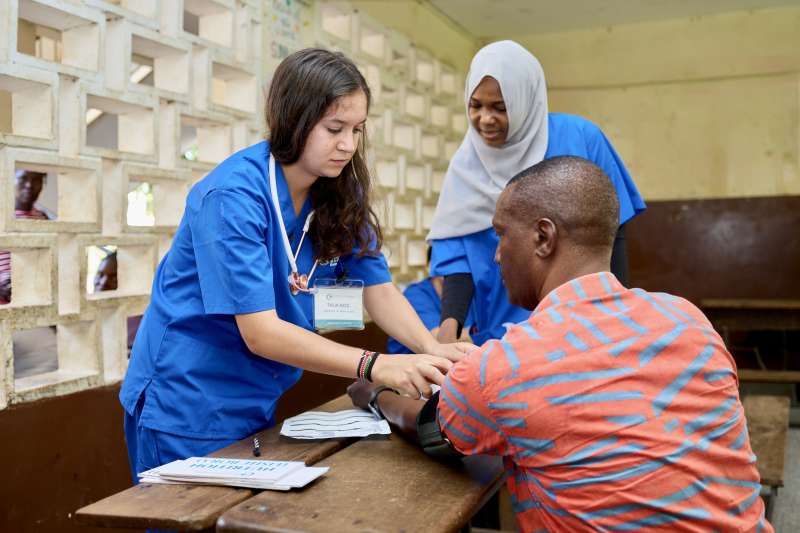
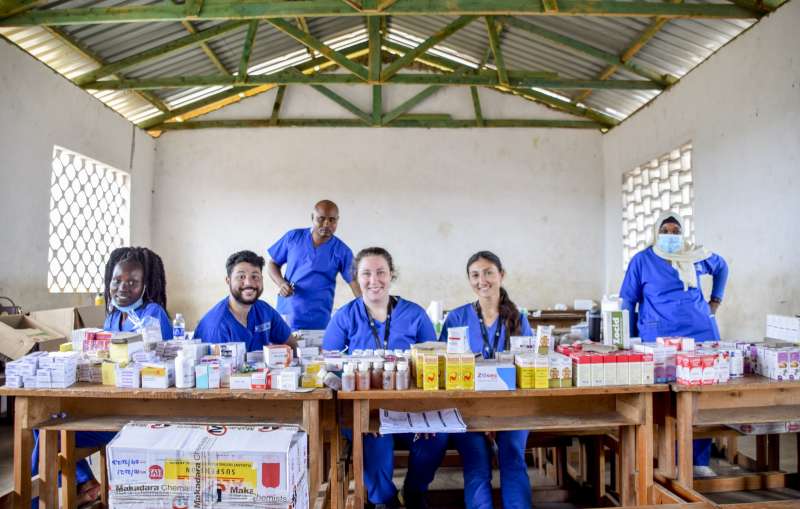
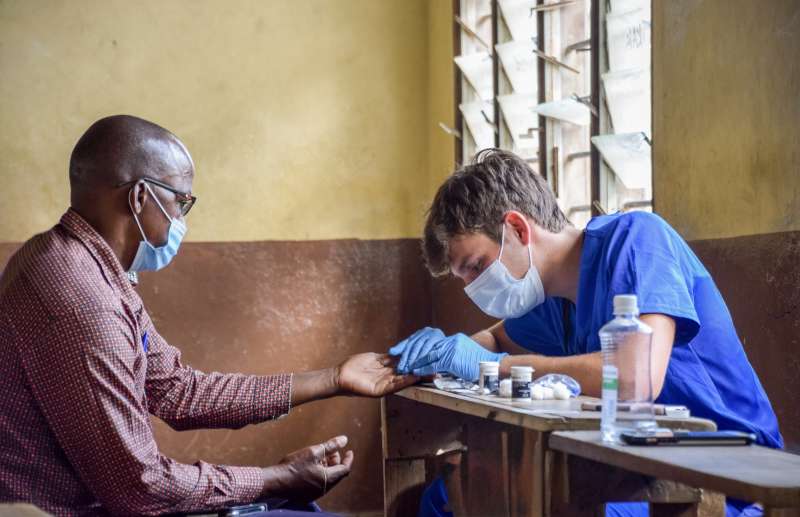
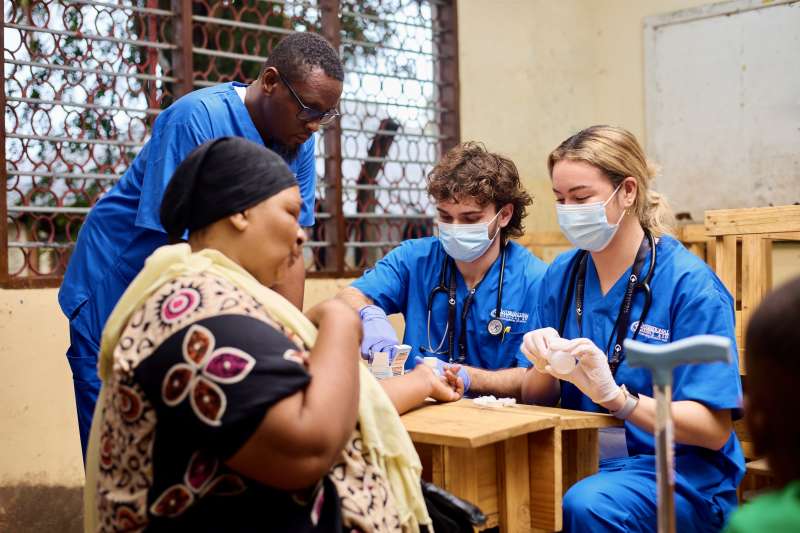
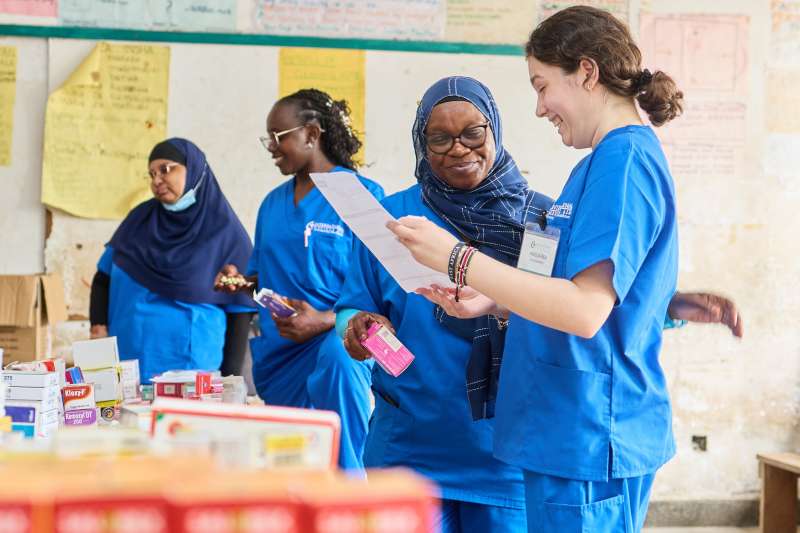
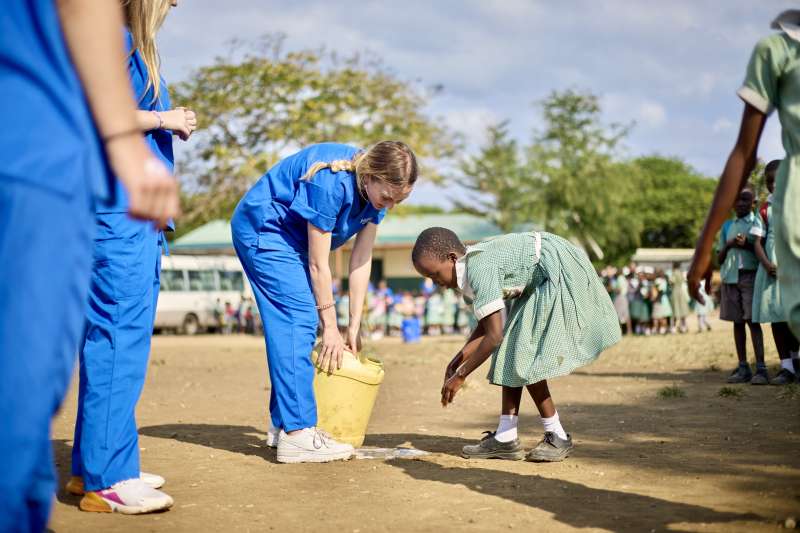
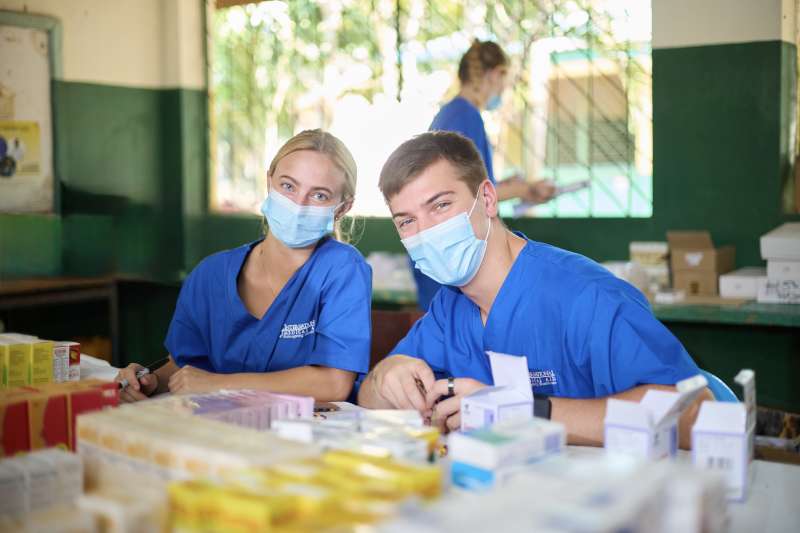
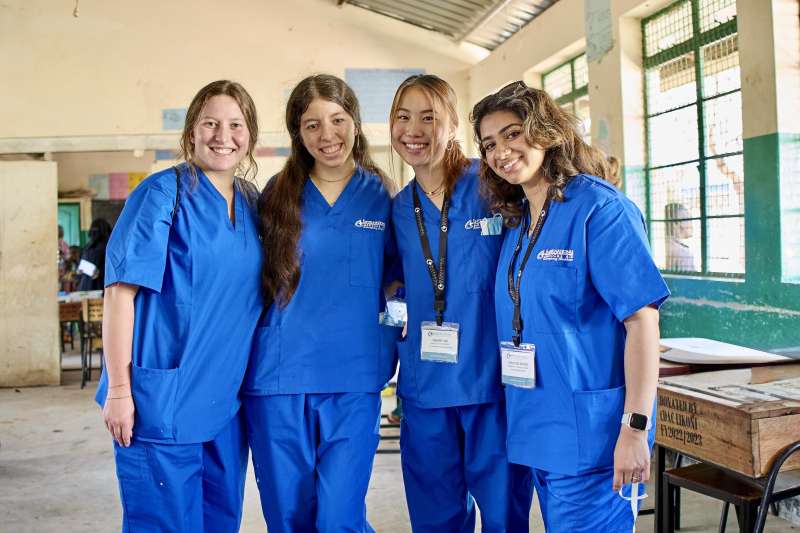
My experience with International Medical Aid (IMA) was truly incredible. I gained so much during my time in Mombasa, both professionally and personally. Throughout my four weeks, I felt consistently supported, safe, and inspired. My placement at Coast General Teaching and Referral Hospital allowed me to expand my clinical skills as a nursing student, broaden my perspective on global healthcare, and bring home new knowledge that I am now applying in my practice in Canada. For this, I am deeply grateful. The community clinics were a highlight of my experience. Each visit left me feeling humbled and fulfilled. We were able to make a real difference by meeting people where they were and providing education in a safe, inclusive environment. The residence where we stayed holds some of my fondest memories. The entire staff was incredibly kind and welcoming from the moment I arrived. Our mentors were consistently supportive—checking in on us daily and sometimes joining us for meals to talk about our experiences. Their presence and encouragement made all the difference. There is nothing I would change about my time as an intern with IMA. The professional and personal growth I experienced would not have been possible without the unwavering support, guidance, and warmth of every staff member involved. I sincerely hope, and fully intend, to return one day. This past summer, I had the incredible opportunity to complete a four-week nursing internship with International Medical Aid in Mombasa, Kenya. As I reflect on that transformative month, I recognize how profoundly the experience shaped me—both professionally and personally. The sheer volume of knowledge I gained, the experiences I had, and the moments I witnessed exceeded anything I thought possible in just four weeks. Now, as I sit down and write, my mind and heart overflow with vivid memories: clinical observations, impactful patient interactions, and invaluable learning moments—each one worthy of its own chapter in a book. From all that I experienced, I return to Canada with a renewed perspective and a deeper sense of self—more intuitive, insightful, and, I dare say, wiser. While I cannot recount every story or experience from my time in Mombasa in this piece of writing, I will use this opportunity to highlight the most meaningful moments and lessons—those that have most profoundly shaped my perspective and influenced how I intend to practice and serve as a healthcare professional. My time in Kenya not only deepened my commitment to nursing but also instilled in me a clearer vision of the kind of compassionate, culturally competent, and purposeful medical practitioner I am determined to become. Kenya’s healthcare system is a tiered system, unevenly built. It is structured into four main levels: community health services, primary care facilities, county referral hospitals, and national referral hospitals (International Medical Aid, 2022, slide 4). While this tiered system is well-designed in theory, significant disparities in funding and resource allocation undermine its effectiveness in practice (Kairu et al., 2021). The most critical gaps exist at the foundational level—community and primary care—where underfunding results in inadequate services and a lack of essential preventative care (Oleribe et al., 2019). These upstream failures cascade into more serious and complex issues at higher levels of care, as patients often present with advanced, preventable conditions that could have been addressed much earlier (Vedanthan et al., 2015). One of the most striking examples I observed was the lack of accessible and effective prenatal care. Without adequate prenatal services, many congenital conditions go undetected or unmanaged (Baschat, 2023). During my pediatric rotation, I encountered a multitude of congenital heart defect cases—conditions that, in many instances, could have been prevented or treated accordingly through routine prenatal screenings and maternal care (Baschat, 2023). Among these patients was a six-year-old girl whose story had a profound impact on me. She had advanced-stage complications of a congenital heart defect, including lung damage, and required both a heart and lung transplant. This type of surgery was not available at Coast General Teaching and Referral Hospital (CGTRH), and her family could not afford to pursue treatment elsewhere. As a result, she was placed on comfort care. I spent several days with her and her father during my rotation, building a bond. Her father spoke about their struggles—financial and logistical—and how he just wanted his daughter to be pain-free. Despite everything, the little girl remained remarkably quiet, never once crying or openly displaying the pain that she must have been enduring. On the day of her discharge, her father told me that she had shared a dream with him: she wanted to become a healthcare provider. She had told her father that she would go home and begin studying so she could help people, just as she had seen me and other CGTRH staff do. Holding back tears, I knelt beside her and asked if I could make her a “daktari” right then and there. When she nodded, I placed my stethoscope around her neck. Her eyes widened, and a look of awe spread across her face. Her father’s eyes grew glassy, and in a moment of sorrow, we found a bit of joy. That experience is something I will carry with me forever. This little girl’s story is one of many that speak to the structural issues within Kenya’s healthcare system—where preventable conditions are allowed to progress due to gaps in early intervention, and where economic barriers determine the course of a child’s life. Yet, amidst these challenges, moments of connection and humanity shine through. They remind me that fair access to healthcare is not just a professional requirement—it should be our moral obligation. I also came to understand the human cost of understaffing. At CGTRH, the ratio of doctors to patients stands at an alarming 1 to 17,000 (NTV Kenya, 2025). This stark imbalance is not just a statistic—it is a daily reality that shapes the way care is delivered, or, more often, not possible. Due to government corruption, limited public funding, and deep financial disparities across the country, Kenya cannot afford to train or retain enough healthcare professionals to meet its population’s needs (Zhao et al., 2023). The result is a healthcare system that is critically overburdened, where the high volume of patients makes it difficult to provide compassionate and individualized care (Babaei & Taleghani, 2019). I witnessed the impact of this crisis firsthand during a day in surgical consults. A young boy came in with complications following a urethroplasty. Scar tissue had formed excessively, closing off his urethra and putting him at risk of acute urinary retention. The doctor assessed the situation and determined that an immediate catheter insertion was necessary. There were no pain medications administered, no attempts at comfort or distraction—just urgency. She asked that I hold him down during the procedure, explaining she had many more patients waiting and no time to delay. I now understand the pressure these doctors face and the difficult choices they must make. I did as she asked. But as the boy screamed—cries of pain and fear—I had to look away. It was one of the most traumatic moments I’ve ever experienced. After the catheter was inserted and began draining, the doctor left the room. The boy lay there, exposed and in visible pain. I helped his mother dress him, watching him wince with each movement. He was expected to walk himself back to the waiting area. I couldn’t let that happen. Instead, I lifted him gently off the table and walked hand in hand to a chair in the waiting room. He sat on my lap, leaned against my chest, and we waited together while his mother went to retrieve pain medication. I let him watch a children’s show on my phone, and slowly, other young patients—some of whom had also undergone a procedure or were awaiting their turn—gathered around us. One leaned on my arm as another rested his head nearby, all quietly watching. For that hour, I wasn’t delivering clinical care, but I was offering something that, in a severely understaffed system, was unfortunately rare: presence, comfort, and empathy. That afternoon stayed with me and taught me something I will carry into my practice as a healthcare provider: patient care is more than procedures and diagnoses—it’s also about dignity, connection, and compassion. I saw firsthand that when a system is too overwhelmed to allow for those practices, it is the patients—especially the most vulnerable—who suffer. Moving forward, I will hold onto this newfound knowledge and strive to create a space for empathy at all times. I will advocate not only for clinical excellence but for compassionate care that sees and honours the person behind the patient. Integrating into Kenya’s healthcare system also came with challenges. The clinical practices and resources were markedly different from what I was used to in Canada. Many of the regulations and routines I had been taught were, and are, simply not feasible at CGTRH due to a lack of materials, equipment, and staffing. Yet, what struck me most was not what was missing—but what was present: impressive skill, resilience, and adaptability. Despite the resource limitations, the Kenyan healthcare providers were knowledgeable and innovative. Where I might have stopped and thought, “There’s nothing we can do,” they found ways. Their ability to improvise—often under pressure—was inspiring and, in some situations, lifesaving. This difference in approach fostered meaningful collaboration between my Canadian training and their resourceful, hands-on approach to problem-solving. One such moment occurred during a shift in the Intensive Care Unit (ICU). A young man was admitted with some of the most severe pressure sores I had ever witnessed—so deep that muscle tissue was exposed. The pain he must have been enduring was unimaginable. I shared with the nurse I was working alongside that in Canada, we often use donut pillows to offload pressure from such wounds. She agreed that we needed to try something similar. Although CGTRH had no such medical devices, we rolled blankets into circles to create makeshift cushions together. We carefully placed them beneath the affected areas, and when I asked the patient if it felt any better, he said, “Yes.” While we didn’t have high-end tools, by combining our experience, ideas, and compassion, we were able to enhance someone’s comfort level. Another pivotal moment of teamwork came again in the ICU, when a three-month-old infant coded. Within a short period, three nurses, a clinical officer, and I were working in unison. One administered medications, one gave breaths, another completed suction, and I performed chest compressions. My mind focused only on doing what had to be done. About twenty minutes into the resuscitation, a medical officer entered the room. I was in the midst of compressions when he asked if I was okay or needed a break. I responded, “No,” and kept going. A few minutes later, he listened to the baby’s chest and assessed, then looked at me and nodded: “The heartbeat is back in the 100s—and it is strong. Well done.” Relief swept over me as my mind caught up to the moment. One of the nurses pulled me aside, checked in on me, and said, “Be proud of yourself. You did something good.” She also reminded me that the child was critically ill, and even with all our efforts, he still might not survive. It wasn’t a burden that could be carried alone. Her kindness, support, and presence in that moment meant the world to me. From this experience, I learned how essential support from fellow healthcare providers is, not only for delivering effective care but for sustaining the emotional strength to continue this line of work. Although we came from different countries, backgrounds, and paths, we were united by a shared purpose. Together, we saved a life. That moment taught me that medicine isn’t just about knowledge or resources—it’s about people. It’s about trust, shared purpose, and the powerful moments when compassion reaches beyond borders. Moving forward, I will hold onto this perspective, recognizing that collaboration and human connection are essential to patient care and to the well-being of healthcare workers. Education is key. According to the World Bank Group, millions of females globally, including those in Kenya, lack the resources and support necessary for proper menstrual hygiene management. This issue stems from limited access to menstrual products, lack of education on the topic, and social stigma. Therefore, millions of females live in ignorance and fear, which directly impacts their health, confidence, and life opportunities (World Bank, 2018). During my time in Mombasa, I was able to witness just how real and pressing this issue is. As part of our community clinic work, we visited numerous schools to conduct Women’s Health Education Sessions, focusing on menstrual hygiene management practices. Before these sessions, I was uncertain about how the girls would respond. Reflecting on my own experience at their age, where I had a solid understanding of menstruation, I wondered if they were already quite informed and thus might see our lessons as unnecessary. I was deeply mistaken. The gaps in knowledge and widespread misconceptions were staggering. It was heartbreaking to learn that many of these young women had never been taught how to manage their periods or understand the physical changes they were experiencing. Many did not know that blood clots and heavy bleeding were often normal, nor were they aware that pregnancy remains a risk during menstruation or before the first period. The silence and stigma around women’s health had left them confused and vulnerable. Despite this, the sessions were filled with curiosity and eagerness. The girls were engaged, asking questions that reflected their desire to learn and understand. We were able to create a safe space where talking openly about the female body was not only accepted but encouraged. During each session, we gradually replaced shame and silence with knowledge and empowerment. To help foster that comfort, I even shared my own experiences with menstruation, showing them that their questions were valid and that they were not alone. Participating in community clinics, such as the menstrual health sessions, taught me the importance and power of education and knowledge sharing. Empowering young women with information is a vital step toward reducing stigma and improving health outcomes. The perspective I gained through these experiences is one that I will consistently apply to my future practice as a healthcare provider: create safe, inclusive spaces that foster learning, encourage open dialogue, and prioritize education, as it is a powerful tool and integral to improving both health and quality of life. My time as an intern with International Medical Aid was more than a clinical rotation; it was one of the most transformative experiences of my life and has profoundly shaped my path as a healthcare provider. Experiencing the healthcare system in Mombasa, Kenya, redefined my understanding of care itself and the people involved, including both providers and patients. I learned that providing adequate healthcare extends beyond diagnostics and procedures. It involves listening, empathy, and the ability to adapt. I witnessed how healthcare systems function under extreme strain, how disparities affect outcomes, and how creativity and collaboration can become the most powerful tools clinicians have. From bringing light to moments that felt impossibly heavy, to holding and comforting a young boy after a painful procedure, to performing a resuscitation alongside an international team, and helping young women understand their own bodies—I now know the kind of healthcare provider I strive to be. I strive to be someone who leads with cultural sensitivity, humility, and compassion. Someone who sees every patient not just as a case, but as a whole person, deserving of empathy, connection, and dignity. The lessons, newfound knowledge, and perspectives I’ve gained from this internship will guide me as I continue down my healthcare journey. Back in Canada, and wherever my career may take me, I will continue to advocate for equity, create safe and inclusive spaces, and never forget what a privilege it is to educate and care for others. Kenya not only helped shape my goals as a healthcare provider and as a person, but it also solidified them in a way that nothing else ever has. I return to Canada with greater knowledge and a commitment to lead with compassion, guided by my new insight and grounded in humility.