Exploring Peruvian Birthing Customs and Holistic Care: My Midwifery Internship Experience with IMA
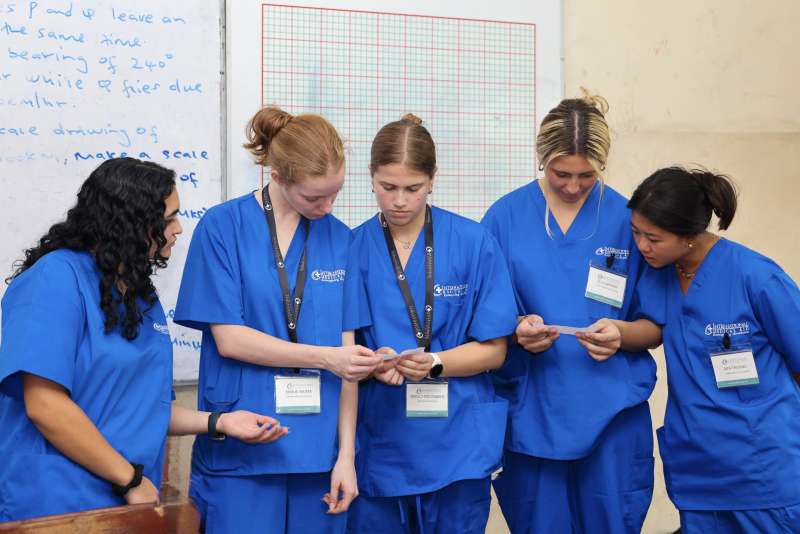
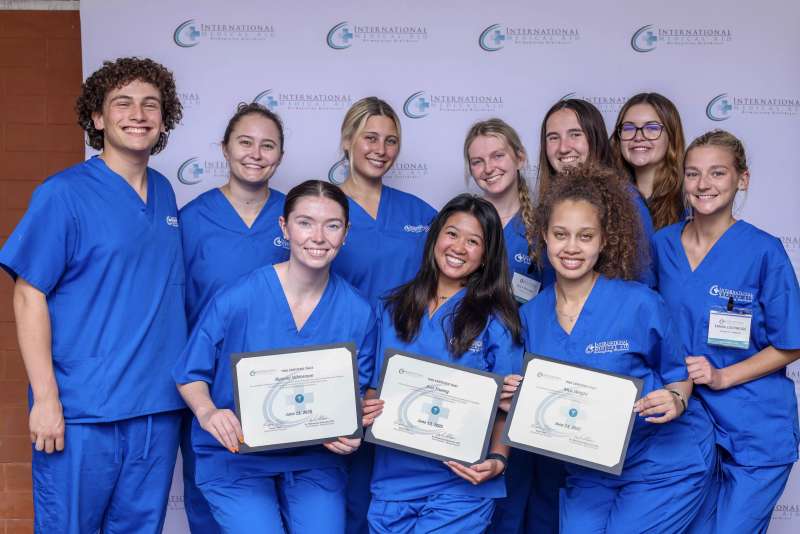
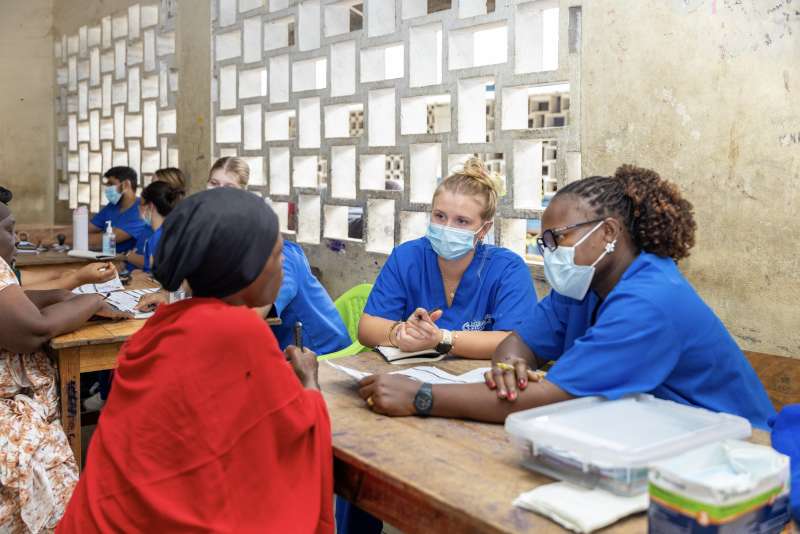
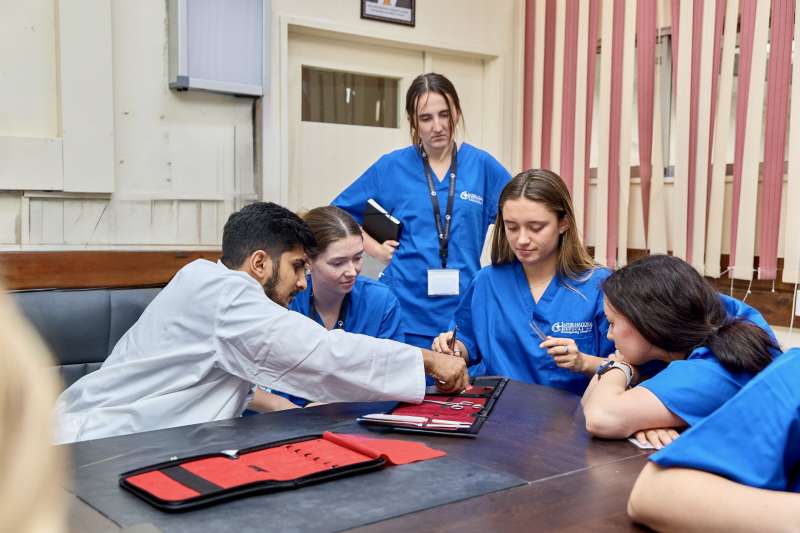
My experience in Cusco, Peru, as a Midwifery Intern at EsSalud Centro Médico Metropolitano de Cusco was extraordinary, and one that I will be forever grateful for. My accommodations were in the heart of Cusco, where the other interns and I felt comfortable walking to dinner, exploring, and experiencing the culture of the city. Our in-country support from our mentors and staff was so welcoming, and everyone was genuinely happy to share a conversation. Our driver each morning, who always let us play music on the way to the hospital, and the amazing program chefs who made sure we were happy and cared for, truly made me feel at home. Our mentors went above and beyond to ensure we were able to get the most out of our experience, and to them I am forever grateful. As a Midwifery Intern, I was able to spend all of my days in the same two rooms with the same three practitioners, allowing me to form real relationships and gain firsthand experience. The obstetricians and I often, in between patients, asked each other fascinating questions comparing maternal and reproductive care in the States to the Peruvian system, and we also exchanged our knowledge on holistic care. During my time in Peru, I had the honor of seeing 122 patients ranging from contraceptive care, to pap smears, to pre- and post-partum appointments. These stories and experiences are irreplaceable, and I hope to one day be as caring, attentive, and awe-inspiring as the obstetricians I shadowed at EsSalud Centro Médico Metropolitano de Cusco. Thank you to International Medical Aid for this incredible opportunity, and I hope to return to Cusco in my future. During my two weeks in Cusco with International Medical Aid, I had the extraordinary opportunity to shadow obstetricians at EsSalud Centro Médico Metropolitano de Cusco. This experience gave me the opportunity to learn about Peruvian birthing customs and holistic medicine in a way that cannot be replicated in a classroom or textbooks. The knowledge I gained from this experience is invaluable and unforgettable, and I am honored and privileged to have received it. I selected International Medical Aid for my midwifery internship because of their integrity and mission. As a Latin American with the privilege of living in the United States, I wanted a program grounded in ethical, community-centered engagement, and IMA stood out for their clear message that the program exists as a symbiotic relationship. Students benefit from meaningful clinical learning while IMA provides free community clinics to give back to those who do not have adequate primary care. IMA’s approach is centered on creating and executing programs that align closely with the needs of the communities they serve, and these initiatives are designed to have a lasting impact that reflects sustainable development principles (@internationalmedicalaid, 2024). This long-lasting care is what solidified my decision to do my midwifery internship with International Medical Aid in South America. It aligned beautifully with my educational and career goals, where I believe representation and multiculturalism are essential steps toward addressing negative social determinants of health. The pregnancy and birthing experience from pre- to postpartum should be filled with joy and cultural customs, and I am inspired to support futures where mothers and babies can thrive. Education, advocacy, and awareness are the foundations for that brighter future. I can’t even begin to express my gratitude to the obstetrics staff of EsSalud Centro Médico Metropolitano de Cusco. As a midwifery intern, I was able to spend all of my days in the same two rooms with the same three practitioners, allowing me to form real relationships and get some firsthand experience. I quickly learned the routine of initial appointments, from questions to ask to paperwork and tests required. I was able to sit back and listen to the consultations and questions of each mother. In between patients, the obstetricians were beyond enthusiastic to answer any of my questions or ask questions themselves, and we could honestly converse for ages about differences between American and Peruvian healthcare systems and birthing customs. We could spend forever talking about holistic medicine alone. For instance, here in the States, birthing customs often come in waves, generally stemming from indigenous cultures or dating back to Black Granny Midwives of the South, and sometimes they become more widely recognized through articles or social media. Meanwhile, in Peru, it seems these traditions have been passed down through generations and remain deeply woven into care. It was remarkable how practitioners in Peru weave indigenous practices into modern medicine, while in the States this balance can feel more difficult to achieve. Practitioners would frequently offer holistic solutions before pharmaceutical ones, or give honest advice such as when mothers asked, “what is the best position to give birth?” and the doctor would respond with squatting instead of the stereotypical position of lying on the back, which has dubious origins anyway (DiFranco, 2014). In the States, I feel that patients, especially patients of color, often benefit from a certain level of health literacy and self-advocacy to have the most empowering birth experience, both of which are privileges. Pregnancy in the United States is often extremely medicalized and has been for years (Johanson, 2002), while in many other countries, including Peru, it is seen as a time filled with cultural customs and joy. At EsSalud, comprehensive and educational care is provided with nutritionist appointments, child-rearing classes, full lab work, psychologist appointments, vaccinations, and pap smears all in one location. In the States, each of these services is often fragmented, and each comes with its own bill, many of them not covered by insurance. Both countries have their flaws and triumphs, and it was enlightening to compare and contrast the two. There is a sense of autonomy at EsSalud that was refreshing to see compared to the systemic issues the United States continues to work through. Right now, I work as a Research Assistant at the Maternal Outcomes for Translational Health Equity and Research (MOTHER) Lab at Tufts School of Medicine in Boston, Massachusetts. There, I serve on the Marketing and Communications committee, where I dissect scientific papers and condense them into infographical posts about maternal-child health equity. This background knowledge fueled my curiosity in Peru, leading me to ask the obstetricians thoughtful questions about differences in their country. The knowledge I gained in Peru will continue to shape my work at the MOTHER Lab and, I hope, my future work as a practitioner. There were many interesting differences, such as the age women get their first pap smear, the ages of first-time mothers, the percentage of geriatric pregnancies, paid parental and maternal leave, and more. In the States, everything is state-by-state, while in Peru the obstetricians noted differences mainly between MINSA and EsSalud. These differences are fascinating and often culturally and socially determined, so it was meaningful to learn how and why they developed. One standout aspect was a document given to each new mother called “Esperando Mi Parto,” or “Awaiting My Birth.” This form allows each new mom to preemptively plan her birth while also giving her provider key information. Some details include questions like who will be in the room, what position she wants to give birth in, and whether she would want to give birth in the hospital at all. In contrast, American hospitals often require patients to independently develop birth plans, and many times those plans are not fully honored. Of course, birth plans and home births are generally supported for low-risk pregnancies, but this form encourages autonomy and helps reduce fear and anxiousness going into this chapter of life. This connects to health literacy again. In the United States, there is often an individualized mindset in medicine where patients feel the need to educate themselves deeply before childbirth because so much information is inaccessible, overwhelming, or anxiety-inducing (Khajeei, 2022). I believe that this one sheet of paper is crucial in giving mothers peace of mind, rather than requiring them to do extensive independent research and negotiation for their needs. Contraceptive care also differed in important ways. In Peru, girls as young as 13 can obtain contraceptives without parental consent, whereas in the States it is state-by-state. Discussing these differences and their origins with the obstetricians was remarkable. Both countries share the same four main methods of contraception for women (besides abstinence): injectables, oral pills, arm implants, and intrauterine devices (Díaz-Alvites, 2022). This was the order of popularity shared by the obstetricians at EsSalud, while in my community in the States I have more often seen intrauterine devices, oral pills, arm implants, and then injections. By the end of my internship, I felt we both benefited from each other’s knowledge and conversations. The community clinic was one of my favorite experiences with IMA. Set up in Poroy, interns had the opportunity to shadow general medicine physicians consulting with the people of Poroy. This was especially exciting for me since I had spent most of my time with obstetricians. I loved sitting in on consultations with a broader range of patients across sexes, ages, and conditions beyond reproductive health. It was beautiful to see entire families come together to receive basic care that is otherwise difficult to access. The community center where we hosted the clinic was also beautiful, and it was inspiring to witness the communal aspect of healthcare, an art that can sometimes feel less emphasized in the United States. Another highlight of my time in Peru was the educational workshops and lectures given by Dr. Fabricio and Manuela. I learned about differences in healthcare systems and insurance models, the funding structures of each country’s health system (International Medical Aid, 2024), and also their similarities. Dr. Fabricio taught us CPR, suturing, how to take vitals, and many other valuable skills I had not had the chance to learn before. Manuela taught us about Peru’s rich history, from Pre-Incan times through modern-day events, including the upcoming election. With these lectures combined, we were able to connect Peru’s social determinants of health to real-life clinical experiences. The lectures were truly eye-opening and answered so many of the questions I had written in my journal during rotations before I even had the chance to ask them. Seeing how socioeconomic aspects of a patient’s life directly impact their health was profoundly meaningful to learn in real time. Along with these remarkable experiences, I also lived my lifelong dream of hiking Machu Picchu. A beautiful end to the trip, a few interns and I hiked the six-hour Inca Trail to the Sun Gate and down to Machu Picchu. It was no easy feat, but one I am extremely proud to have completed. Not only were the views and flora astonishing, but learning about Incan culture and history reignited a sense of wonder I felt as a child reading picture books about Machu Picchu. Learning about Pachamama, Mother Earth, and relating it back to Peruvian birthing customs I had learned throughout my experience was especially meaningful, including that “women in Inca society typically gave birth at home in a squatting position (toward Pachamama) with the assistance of a midwife or female family members” (Pacino, 2015). Truly a once-in-a-lifetime experience that I will always cherish. In true Latin American fashion, I must express my deepest gratitude to the people—the amazing IMA staff including Manuela, Eder, Grezia, Dr. Fabricio, Dra. Miriam, Señor Victor, Hans, and Piero of DolciDolci—along with the wonderful obstetricians of EsSalud, and the land of Cusco for hosting me. I am the first person in my family to be born in the States, to go to college, and I will be the first to go to medical school, where I hope to one day give back to my community as an obstetrician. During my time in Peru, I had the honor of seeing 122 patients ranging from contraceptive care, to pap smears, to pre- and post-partum appointments. These stories and experiences are irreplaceable, and I hope to one day be as caring, listening, and awe-inspiring as the obstetricians I shadowed at EsSalud Centro Médico Metropolitano de Cusco. Thank you to International Medical Aid for this incredible opportunity, and I hope to return to Cusco in my future!
Photos