- Home
- Providers
- Back
- IES Abroad
- IES Abroad Tokyo – Language & Culture


IES Abroad Tokyo – Language & Culture
by: IES Abroad
Expand your understanding of Japan by immersing yourself in contemporary Japan and its culture and what better way to learn the Japanese language? At Kanda University of International Studies (KUIS), you take a 6-credit language course specially designed for IES Abroad students (with the option of taking up to 12 credits of language), plus area studies courses taught in English. The English-langua...
Expand your understanding of Japan by immersing yourself in contemporary Japan and its culture and what better way to learn the Japanese language? At Kanda University of International Studies (KUIS), you take a 6-credit language course specially designed for IES Abroad students (with the option of taking up to 12 credits of language), plus area studies courses taught in English. The English-language course offerings look at Japan from the point of view of popular culture, history, politics, and the arts. Founded in 1987, KUIS is a private university dedicated to the pursuit of excellence in International Studies, Foreign Languages, Intercultural Communication, Japanese Culture, and Linguistics.
Program Highlights
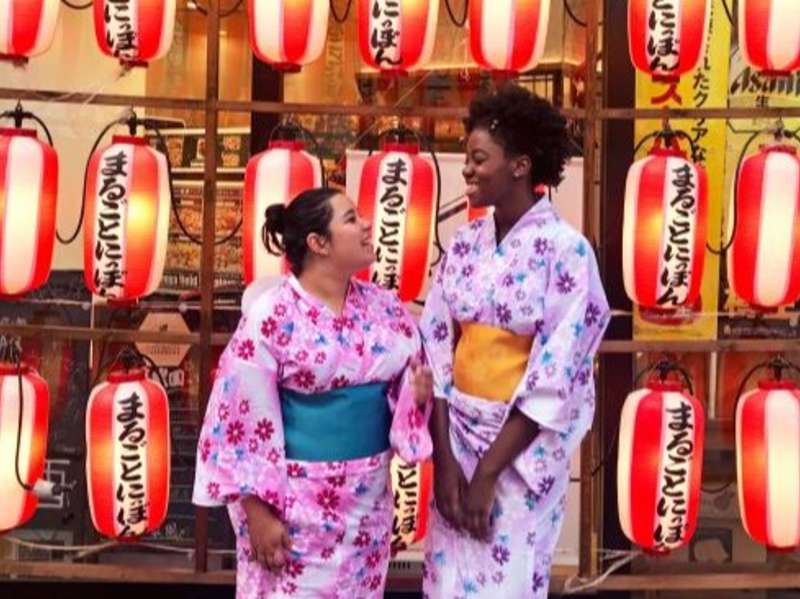
Visit Tokyo's traditional hot spots, like the temple at Asakusa, the gardens of the Imperial Palace, and the Meiji Grand Shrine
Learn about Tokyo's younger generations by visiting popular districts like Shibuya, Shinjuku, Akihabara, and Harajuku
Enroll in a Japanese language course alongside English-taught area studies courses; disciplines range from anthropology to film studies to marketing and beyond
Explore the culture by living with Japanese students or young professionals in a residence hall, or with a host family in a homestay
Join the "ePal" program, where you'll be matched with a Japanese ePal one month before your arrival who will be your cultural resource during the term
Media Gallery
Quick Details
- Tokyo, Japan
- Fall
- Spring
- Academic Year
- Anthropology
- Art & Fine Arts
- Communications See more
- All Nationalities
Awards


Program Reviews
Hear what past participants have to say about the programs
Overall Rating
Total Reviews
An amazing semester at KUIS!
February 01, 2020by: Kate Lucas - United StatesProgram: IES Abroad Tokyo – Language & CultureI had such a wonderful time studying with IES Abroad in Tokyo! The administrators were so encouraging and enthusiastic when I expressed interest in getting involved with the local community. The traveling opportunities were so much fun, and I enjoyed our excursions a lot. The coursework was a little light, but it allowed me time to really get out and explore Japan, and most of my Japanese learning happened when I interacted with other students at Kanda University of International Studies. The KUIS campus is absolutely gorgeous - a wonderful place to spend a semester. Their English language learning building/library is the nicest academic building I've ever seen - I spent time in there every day.

Best Fall semester yet!
January 27, 2020by: Amy Sanders - United StatesProgram: IES Abroad Tokyo – Language & CultureHaving been to Japan--and specifically Makuhari--before, I more or less knew what to expect. Still, with getting to explore new areas of Japan through IES field trips, cultural activities, and just learning my way around my housing area, I got to learn and experience new things! The IES Tokyo staff is incredibly friendly and helpful, which made the entire process so much easier. The E-Pals are fabulous, too--they really helped us navigate the "official" side of things, like getting commuter passes for the trains and buses and helping us fill out paperwork at the city office. The campus itself is also incredible! KUIS has lots of different clubs (one of my friends did taiko!), and they have a specific building for encouraging students to speak English; naturally, most IES students hung out there! Even with classes, my friends still had time to do things like go to cat cafes, visit Universal Studios Japan in Osaka, and explore all the popular spots in Tokyo. The IES field trips (both class field trips and special IES field trips) and cultural activities allowed us to learn about Japanese culture alongside friends outside the classroom, so we got to do more than just study in a classroom while abroad. Between making new friends, learning more about Japan *in* Japan, and getting the opportunity to focus on growing my language skills, fall semester was oh so worth it!

A summer in Tokyo
October 02, 2019by: Matthew Nishimoto - United StatesProgram: IES Abroad Tokyo – Language & CultureAs the clouds above soaked a dampened atmosphere, I hurried under an awning to take shelter from the first shower of the rainy season. As if being conducted by maestros along the tops of adjacent skyscrapers, flurries of hotfooted salarymen began to weave between their fellow commuters in a rush hour ballad, only to crescendo in the simultaneous opening of their clear plastic umbrellas as they left the stage of Shinjuku station. Once notorious for employing “pushers” to push commuters onto overloaded trains, Shinjuku station remains one of the busiest train stations in the world with over 3.5 million commuters passing through its gates every day. Although maybe not something that everyone would find amusing, it is a sight that made me truly appreciate the scope of the world. I grew up surrounded by the sugar plantations sowed along the hills of Hanapepe, Hawaii. Though I would leave the island for university, I would again find myself in a bucolic bog in the wheatlands of Pullman, Washington at Washington State University. Studying computational neuroscience and Japanese, I decided that I should study abroad in Japan to gain an immersion into the language and culture to understand more of what Japan was about. That is when I discovered IES’s summer Tokyo program. If chosen to participate in the program, you will meet up with your fellow students for a few days of orientation and placement examinations. At the time of my writing this review, there are six total classes spanning from the 1000 to 3000 level with two classes in each division. They are all held on the same campus that you will dorm at in the National Olympic Memorial Youth Centre in the outskirts of Shinjuku. You will dorm in an on campus dormitory, living in an approximate 15’X 5’single room with a desk, communal restrooms/wet rooms, and communal laundromat. I had tested into the higher division of the 3000 level classes. I believe the level of instruction in class is more than satisfactory. Classes are quite personal (~8-20 people). Each class does various extracurricular activities throughout the semester based on level. These range from cooking classes with native Japanese students to traveling to national museums to learn more about the country and culture of Japan. But I believe the true value of the program is found beyond the boundaries of the campus. Shinjuku station lies a twenty-minute walk or five-minute train ride to the North of campus. From there, the entirety of Tokyo’s 23 wards, an area spanning 239 sq mi, is accessible via subways. metros, buses, and a multitude of other modes of transportation. A new perspective of Japanese culture to the commuters that get off at every station. From the hub of anime and everything Japanese pop related in Akihabara, to the 3-starred Michelin restaurants and ultra-luxury malls of Ginza, every destination that comes to mind when thinking of Japan is within a stone’s throw from the youth centre. You could even take a weekend trip to Kyoto or Sapporo if you wanted (something that I frequently did via the bullet train coming out of Tokyo station). I have made many friends in the program, fellow exchange student and native Japanese alike. I will never forget the memories that we made in class, the nights in the karaoke booths in Shibuya, or the subsequent trips to the adjacent streets lined with “izakaya”s. You can only learn so much about Japan from inside of the classroom. But, if you are truly interested in learning more about the country, what its people and culture are really like, then why not take a summer to learn abroad in the most populous city in all of Japan?
Program Details
Learn all the nitty gritty details you need to know
Locations
- Tokyo, Japan
Types and Subjects
- Subjects & Courses
- Anthropology
- Art & Fine Arts
- Communications
Availability
Years Offered: 2021
- Fall
- Spring
- Academic Year
Age Requirement
Age Requirement Varies
Guidelines
All Nationalities
Cost per week
Accommodation Options
- Dormitory
- Home-stays
Qualifications & Experience
- Any/All Education Levels Accepted
Accepted Education Levels
Application Procedures
- Transcript
- Online Application
Interviews
Read interviews from alumni or staff

Gabrielle Margocs
Participated in 2015
Gabrielle is a senior at Austin College in Texas. Majoring in media studies and minoring in Japanese, she has taken two trips to Japan: a short, two-w...

Gabrielle Margocs
Participated in 2015
I applied to an international program in order to use and develop my knowledge of Japanese language and culture, experience a place and people outside my own, and open my mind to new and different ideas, behaviors, lifestyles. Also, to get a taste of living overseas and to see if I could possibly work there (or abroad anywhere) in the future.

Emily Yocom
Participated in 2016
Emily is a junior studying international politics and business at Penn State University. She was president of the university’s Schuylkill honors socie...

Emily Yocom
Participated in 2016
I had grown up in a small town and attended college where I grew up, so I knew that I wanted to do something out of my comfort zone and go somewhere very different from home. Going into college, I didn't know much about study abroad, but once I learned it was possible, I knew it was something I had to do. I knew that it would educate me about a culture beside my own, which was really the goal.

Kate Lucas
Participated in 2019
Kate Lucas is an English major and Japanese minor at the College of William & Mary in Williamsburg, Virginia. In her spare time, she likes to write mo...

Kate Lucas
Participated in 2019
I've wanted to go abroad to Japan since I began studying the language in high school. I thought of it as the goal I was working toward, an adventure to have after all the time I had spent working hard as I learned to speak Japanese. I studied Japanese for five years before going abroad, and nearly decided not to go for the full semester, since I loved my home university so much. However, after a conversation with my friend from home, I remembered how long I'd wanted to have an adventure like this, and decided to dive in headfirst.
Ready to Learn More?
Expand your understanding of Japan by immersing yourself in contemporary Japan and its culture and what better way to learn the Japanese language? At Kanda University of International Studies (KUIS), you take a 6-credit language course specially designed for IES Abroad students (with the option of taking up to 12 credits of language), plus area studies courses taught in English. The English-language course offerings look at Japan from the point of view of popular culture, history, politics, and the arts. Founded in 1987, KUIS is a private university dedicated to the pursuit of excellence in International Studies, Foreign Languages, Intercultural Communication, Japanese Culture, and Linguistics.

IES Abroad

IES Abroad
Ready to Learn More?
Expand your understanding of Japan by immersing yourself in contemporary Japan and its culture and what better way to learn the Japanese language? At Kanda University of International Studies (KUIS), you take a 6-credit language course specially designed for IES Abroad students (with the option of taking up to 12 credits of language), plus area studies courses taught in English. The English-language course offerings look at Japan from the point of view of popular culture, history, politics, and the arts. Founded in 1987, KUIS is a private university dedicated to the pursuit of excellence in International Studies, Foreign Languages, Intercultural Communication, Japanese Culture, and Linguistics.
Related Programs
Browse programs you might like