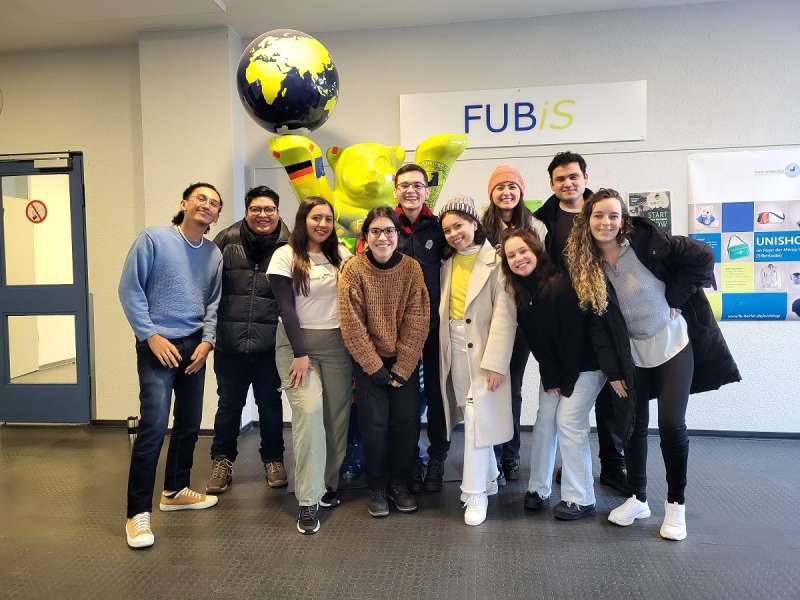
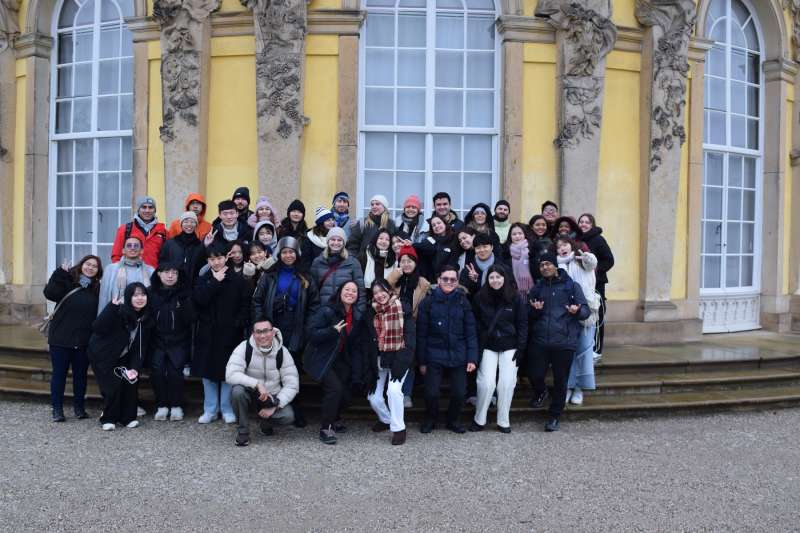
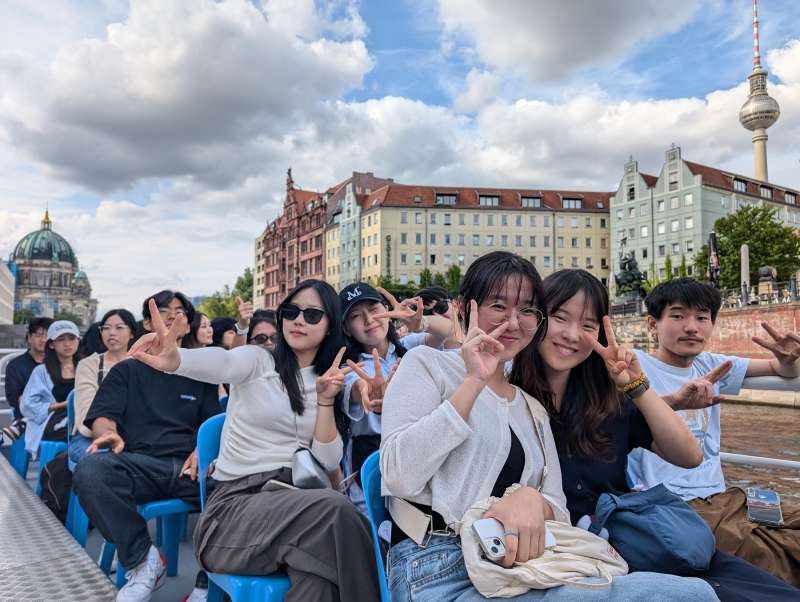
The three-week exchange program provided by FUBiS Winter Term I 2015 has been a
wonderful experience that I am glad to share and recommend. In order to tell you a
little bit about my own thoughts regarding the course as a whole, I will divide this short
report in paragraphs as the following: a view on Berlin and its special characteristics;
living in Berlin as an exchange student and the social life; the academic experiences;
the extracurricular activities related to FUBiS; and closing remarks. Before going over
these topics, I would like to deeply thank FUBiS staff for their hard-work and care
throughout the program, as well as the Association of Supporters of Freie Universität
Berlin, Ernst-Reuter-Gesellschaft, which granted me a scholarship and therefore
handled me the opportunity to live all the experiences presented ahead.
“Berlin is a city of stories unnoticed”. This phrase came to my mind after trying hard to
summarize my feelings about the place where 2015 started to me and which will have
impact on my whole year and life. The phrase is based on Gay Talese’s article “New
York is a city of things unnoticed”, which I love and remembered a lot throughout
FUBiS Term I 2015. Every corner, every brick of Berlin is a must-see. However, the
difference between Berlin to New York, São Paulo and many other megalopolises in
the world is that you will not know Berlin by just visiting the touristic spots, which are
mapped and stressed in any good city guide. The real beauty of Berlin and its places is
not their architecture, their superficial history, or the jewels and paintings they have
inside; but rather their underlined story, the incredible past they went through as
Germany has been stage for most of the best and worst historical events in the world. It
is a city of the extremes and the details, where two identical cathedrals sit side by side;
where the university that held professors such as Marx and Einstein is at the same
place in which "the biggest library" of Germany was located and there was the historic
burning of hundreds of thousands of "un-German" books by the Nazi government;
where the Berlin Free University has as its founding departments the quite American
Benjamin Franklin U. Hospital and Henry Ford Buildings. In which the place Hitler killed
himself is nothing but an open area parking lot.
In this amazing city, I had the possibility to get in contact with quite different languages,
art expositions, museums, memorials, theaters, sculptures, monuments, flea markets,
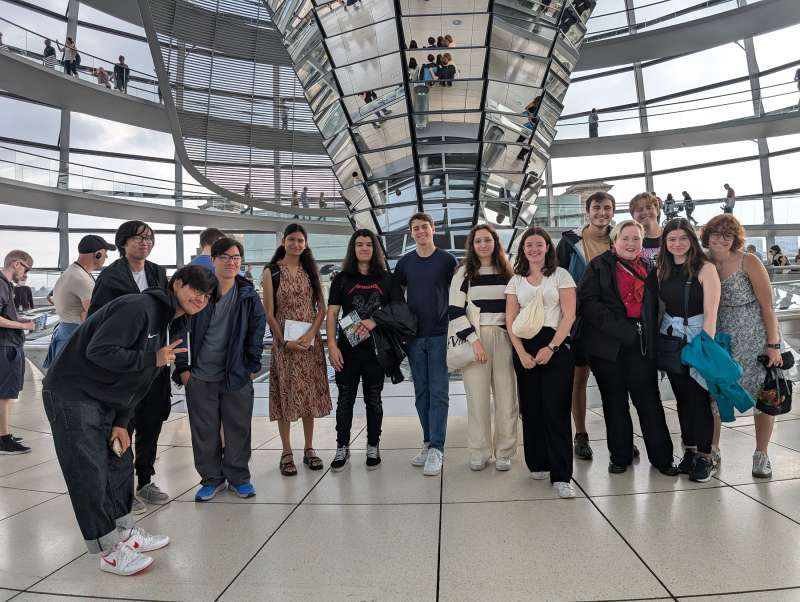
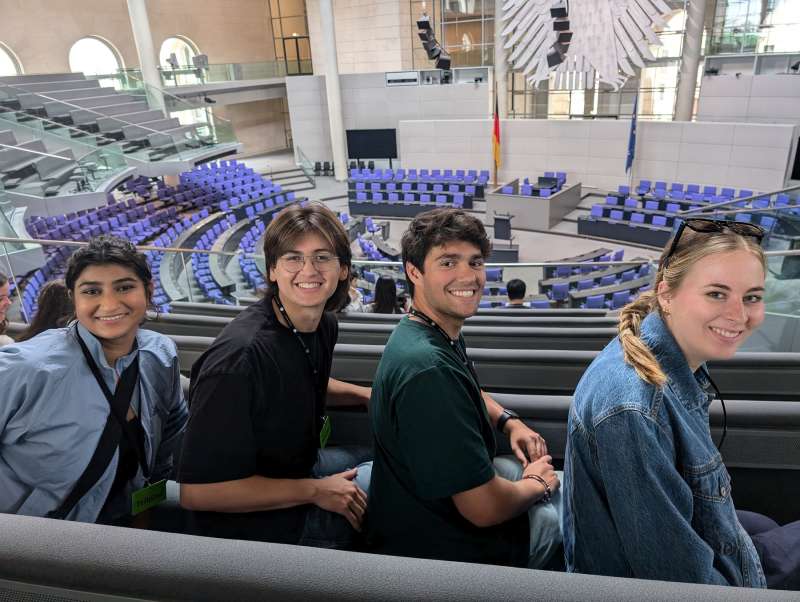
walking tours, pubs, parties, cafés and even the Bundestag, the former concentration
camp of Sachesenhausen and a currently activated prison. From the diversity of those
activities and people I met by attending them, I felt that being in Berlin allows you to
Name: Allan Greicon Macedo Lima.
Course Subject: Law, Politics and Society in Comparative Perspective.
University of Sao Paulo, Brazil.
have a taste of the whole Europe, as people from throughout the continent were living
and/or traveling to the capital of Germany in the cold end of December and January.
Additionally, I was somehow connected to the past and the future as the city has so
many memorials and historical places; this experience was intensified by the fact that I
could see many friends I met in the past few years who now live in Berlin or had a trip
to visit me there.
As I mentioned, FUBiS is a quite holistic experience and the classes I took were not
disconnected to the reality I was living in. We have discussed, over the near 50 hours
of intense classes, many difficult and varied issues related to authoritarian and
totalitarian regimes, sociological theories and political regimes. Then, we would often
go over current events and discuss them according to what we have read. For
example, one day before the tragedy in France regarding the deaths in Charlie Hebdo
and at the same week of demonstrations of Bärgida in Berlin, we had discussed in
class how the so called Anti-Islamization groups could be spreading in Europe. Another
case was the discussion over death penalty and the criminal or restitutive aspects of
law, which occurred just after the first Brazilian was ever punished by death sentence,
in or out of Brazil (this capital punishment was held in Indonesia).
Apart from the interesting academic bibliography, it is worthy saying that the places we
visited within my program schedule were great. We went to the Berlin-
Hohenschönhausen Memorial, on the site of the main political prison of the former East
German Stasi, and our guide was actually an ex-prisoner who tried to escape from
East Berlin in 1978. We also visited JVA Tegel prison, the second biggest institution
considering the number of closed execution prisoners in Germany. These visits had
deep impact on my views over justice and history, as well as made me analyze or
reanalyze pieces of our reality I am used to just taking for granted.
As a conclusion to this short, but sincere and hopefully useful article, I can just say
FUBiS is a really worthy experience, mainly if the student has a positive attitude
towards the events and challenges intrinsic to an exchange program. Participating in
the activities already planned and whatever shows up in a city such as Berlin is a life
enriching opportunity and I hope to go back to Berlin soon for other courses and to
meet some great friends again!