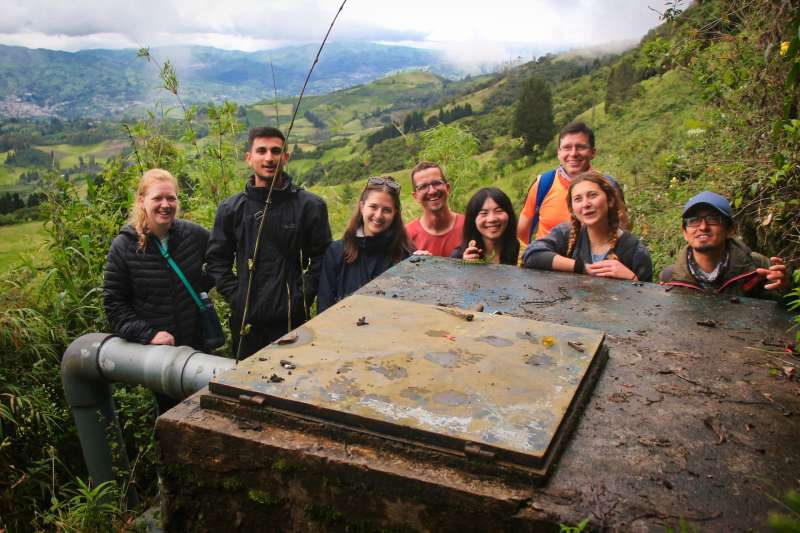
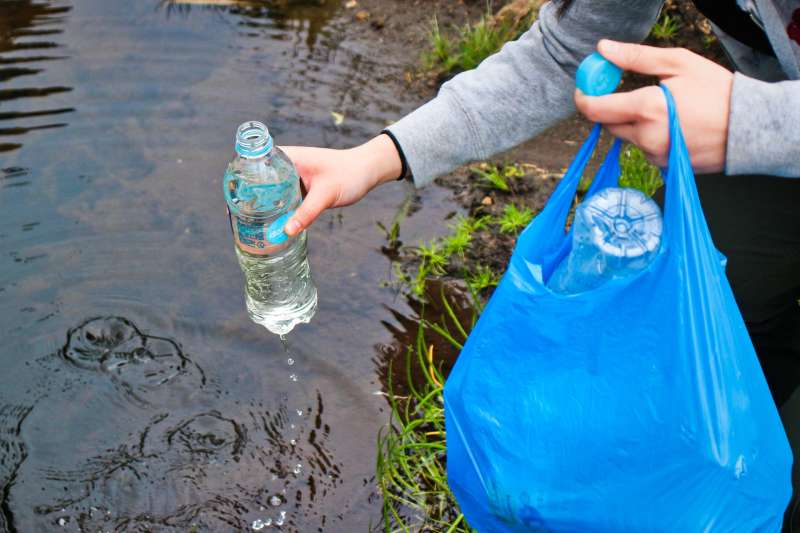
In 2025, I had the opportunity to participate in a three-months internship program at El Terreno, Atandahua, Ecuador. My project was focused on the improvement of the drinking water situation in Atandahua and the neighboring communities. Before starting the project, I had a short interview with Joshua, CEO and founder of El Terreno, to figure out what my motivations and expectations of the project are, what kind of character I am, and if I’m a good match for the team.
Arriving at the airport in Quito, there was an organized pick-up for the transfer from Quito airport to Atandahua. Arriving on the same day as two other volunteers, I had the opportunity to get to know them a little bit on the four-and-a-half-hour-long drive. Travelling from Quito airport to Atandahua would have been possible by bus aswell, but for that, a better understanding of the public transport system in Ecuador would have been necessary. Now, with the experience I made in Ecuador, I could easily achieve that. Back then, it was a lot easier with the organized pick-up.
Having arrived in Atandahua, we were very warmly welcomed at “El Terreno”, where I could very comfortably move into my new home for the next three months. And indeed, it became a home. The bed in a shared dorm with three bunk beds (six beds in total plus one individual bed, but only at max four of them occupied at a time) were comfortable. The kitchen space was big enough to comfortably cook on the six gas stoves provided, even with several people cooking their food in parallel at a time. The organization of the food storage inside and outside of the fridge is strict, but very well done, even though one fridge proved to be a bit small if there’s a lot of people. During my stay this issue was solved by installing a second fridge.
From the beginning, Joshua and his family were lovely people, and it felt really good staying with them. Joshuas wife Karina provided one warm meal per day for lunch time, which was super delicious, and I’m very grateful to have had the opportunity to taste original Ecuadorian food.
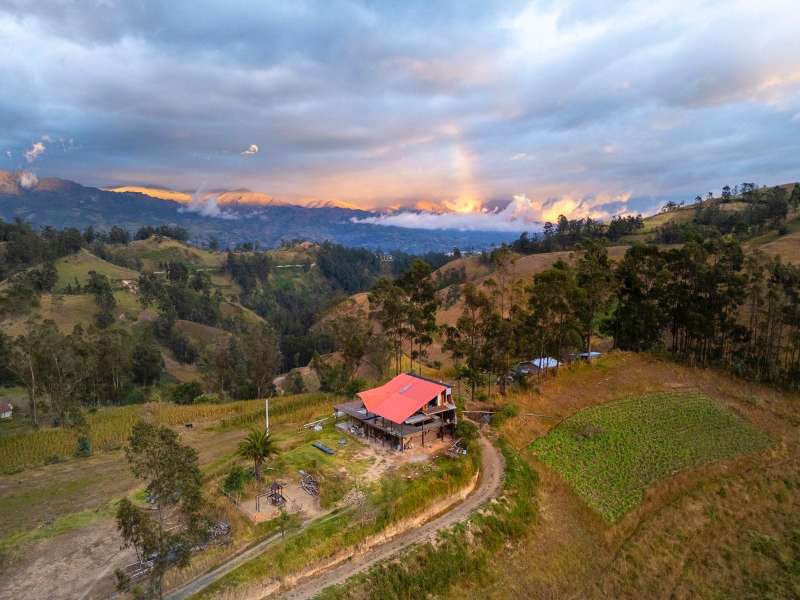
“Quilico”, the house where the volunteers live together, is a very comfortable home, with a woodfire oven, gas stoves in the kitchen, and hot water showers. A big common area invites everyone to spend time together, but at the same time it is possible to retract from social life and have a bit of private time in the shared dorm rooms. The cleaning regime of “Quilico” is very well organized and Joshua has a strict eye on the tasks that need to be fulfilled by everyone to make a comfortable living together possible.
The project work is very well organized, oriented at the design methodology approach. An introduction to design methodology is provided by Joshua. Mentors give an insight into the setting, the community and the problems and objectives of the project during the first four weeks. This is the basis for understanding the aim of the project properly. The next phase (additional four weeks) is the planning of actions aimed at providing solutions for the problems identified in the first phase. The last phase (another four weeks) is the execution of the plan to put the possible solutions into reality and testing their strengths and limitations.
The social life at El Terreno is beautiful, with the opportunity to meet people from all around the world with the same intentions of doing something valuable for the community. There is sufficient free time to get to know each other, play games, cook and eat together and even have a party or watch a movie on the beamer. Once a week there is a pub quiz (“trivia”) in changing locations in Guaranda which is always fun to participate in. There, local people from Guaranda and the surrounding communities meet the foreigners of El Terreno and other organizations to answer trivial yet sometimes pretty tricky questions in a relaxed atmosphere with food and beers. The perfect opportunity to get to know the locals. I always loved trivia! 😊
As beautiful as my stay at El Terreno was, there is one point that should have been communicated better during the execution of the project, which is the continuation of the project after me having left El Terreno. Unfortunately, the projects prototype didn’t fulfill the expectations to a hundred percent which were put into it in the first place. My understanding was to figure out the issues and improve the prototype to finally achieve an optimized and reliably functional product. After I had left El Terreno, the prototype was exchanged against an off-the-shelf solution, which I intentionally had avoided due to major drawbacks in terms of long term costs and sustainability. Knowing this, my work and effort at El Terreno felt somehow wasted and I feel I could have achieved more focusing on other aspects of the project which my skills and expertise would have been more useful in the long run. With that said, I want to add that I definitely have all respect for the decision of El Terreno not to continue with the prototype because I am leaving after three months going back to Europe, but El Terreno has to make sure the equipment provided is working properly and must defend it against the community’s interests. The off-the-shelf solution was definitely a quick and more reliable solution for the water quality issues, yet with - from my point of view - major drawbacks in sustainability.
Still, I enjoyed my time at El Terreno a lot and I’m happy coming back to the beautiful place on the outskirts of the Chimborazo volcano soon.