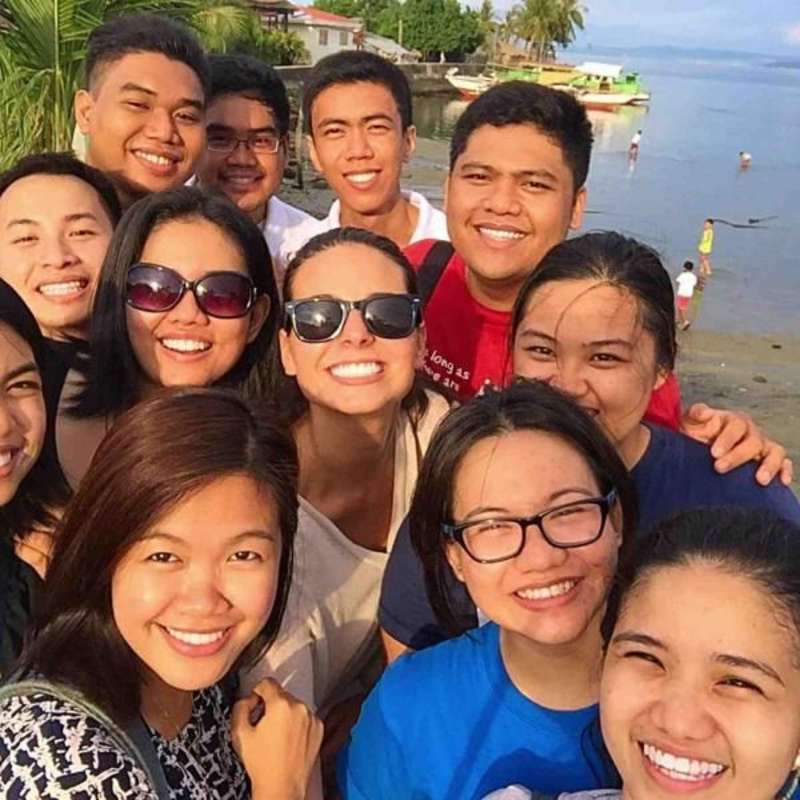
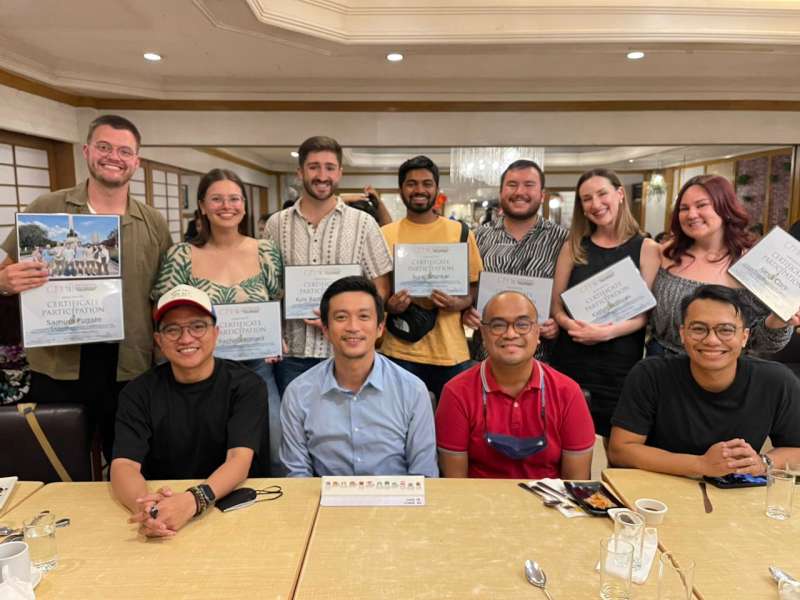
I participated in Global Health in The Philippines Program. I traveled to Manila, Philippines, for one week and then was assigned to the remote island part of the program for three weeks. I was sent to a small island called Tingloy which had a population of 19,000 and was in the Batangas Province of Luzon. The first week when I was in Manila, the group I was traveling with and I were introduced to the rich culture of this country. We visited tourist spots like Rizal Park, the National Museum of the Philippines, and Intramuros. This helped introduce and contextualize what we would learn about the Philippine healthcare system. Then we had an authentic Philippine dinner and saw the national dance called the Tinkling.
Furthermore, we were introduced to the disparities of Manila as we went to a part of the city that is very underdeveloped. This opened our eyes to the inequity within Manila. The next day we went to Chinatown, and this Chinatown is considered one of the oldest Chinatowns in the world; we got to try some pretty good frog legs, and then we were taken to an area of Manila called Quiapo and visited the local street markets in vendors.
Then we were taken to a church called the minor basilica of the Black Nazarene, and this is where we learned about how Catholicism and religion play a significant role in how some policies, such as reproductive health and rights, are controlled within this country. We were also sent home later that night to watch a documentary called sicko which is about the American healthcare system, and this was going to be used to compare to what we learned about the Philippine healthcare system as we sat through six hours of lecture on the current state of the Philippine health care system. The Philippine healthcare system, in general, is run by the Department of Health, and it very much tries to veer away from an American privatized healthcare system. However, due to the existence of public and private health care, there is a vast disparity between the two, and about a little less than half of the Filipino population pays out of pocket for their medical treatment because the universal national healthcare insurance called Philhealth does not fully cover or provide basic needs. The next day we went to San Juan and Ternate Cavite; we visited the Barangay Health Station, which was pretty underfunded and had limited resources. We also got to watch a baby receive its immunizations. Then after we sat in on a lecture with medical interns who were training volunteer barangay health workers, it was exciting as many of these health workers themselves were volunteers, and two had minimal knowledge of medical-based things such as how to properly track someone's height, how to properly weigh a child, how to calculate BMI.
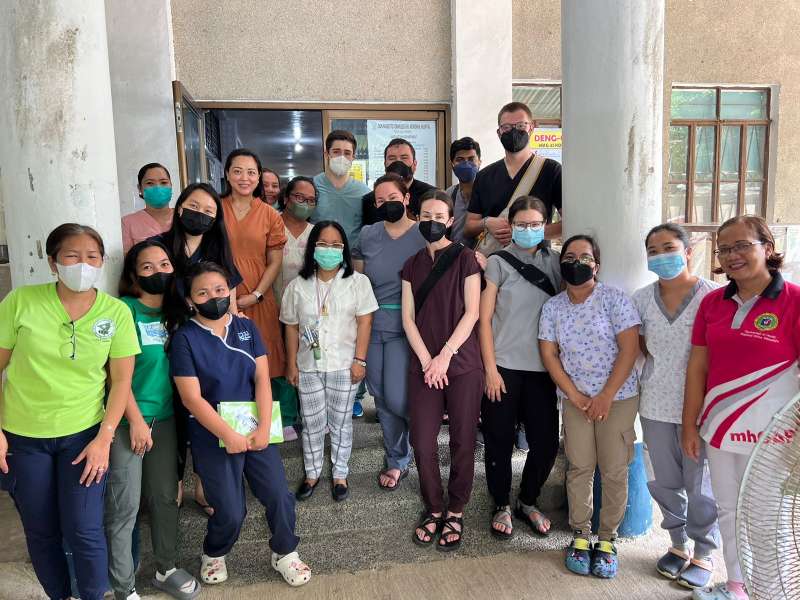
However, they are essential for the Philippine healthcare system as many people within the town will go to these volunteers when they are sick and will only visit the primary healthcare center if there are concerns that do not alleviate or go away. These volunteers are the front-line workers of the structure of the primary health care system. We took some photos with them, which was fun, and they did get to practice all these skills with us. Then we headed to Ternate, Cavite, where we saw the Municipal Health Officer, Dr. Gina. She showed us her facility, which was more underfunded than San Juan. However, a dentist did exist but mainly only for extractions. She also talked about how the DOH does not pay her enough and that she's not provided enough money to deal with Ternate's number one program that they have in place, which is the drug rehabilitation program. The next day, we visited the Philippines General Hospital, the largest public hospital in Manila and the country.
As I walked through the facility, it was very crowded, and our local preceptors told us that some people might be sitting there for two to three days to see a doctor. However, they did have a wide range of specialties, and we got to see the ER. It was interesting to see that people were sprawled out in the lobby in beds and that medical interns, so medical students that had just graduated, were doing the job of doctors as there was not enough staff to be spread. They were allowed full diagnosing abilities also. Then we visited BCG, one of the wealthiest parts of Manila, and we got to see St. Luke's Hospital, a private hospital. It was a night and day change as St. Luke's looked like an upscale mall that had restaurants and cafes in very fancy accommodations to come with it. Many upper-class business people and foreigners in general visit St. Luke's. This showed the difference between what money could get you in Manila and the disparities between public and private healthcare. Some experience I had in Manila was I went to Robinsons Mall, which is this massive mall within Eremite. I could get everything there, and I tried Jollibee, the national fast-food chain of the Philippines. I liked it because it was chicken and rice.
I also got to ride in a Jeepney, an old war machine/tank turned into a bus-looking thing, you pay for seven kilometers, and they're very hard to navigate, but they were still fun. We also visited a souvenir shop, and there were these cute fish wallets. Also, the night we stayed at BCG, our local preceptors got dinner with us, and we went to a fun karaoke room. I wish they would have them in the US. On the last day of Manila, we just had a lecture about a video that explained how a small child died. We had to analyze the video and develop a web chain to explain what happened. The point of the lecture was to see that public health plays a huge role in someone's well-being and that a lot of outside environmental factors affected the death of this child, and it wasn't just the disease that took her. They wanted us to use this perspective when we were sent to the remote islands as necessary, as many outside factors affect the type of healthcare these populations receive. We got in a car and traveled to Talaga port; we would take a 35-to-40-minute ferry to Tingloy. There we got on a trike, the only mode of transportation on the island except for walking or taking an ATV. Then we went to the rural health unit and met Doc Patt, which was funny because everybody on the island knew who doc pat was, so we just had to say that name, and they knew where to send us. We were the second batch of students on Tingloy, so many of the locals were not used to having foreigners. The homestay we stayed at was excellent, and our host mom Ate Czen was lovely and kind; she introduced us to her kids and cousins, and the word about us on the island spread very quickly. The rural health unit in Tingloy is nice and set up like a hospital due to the last mayor wanting to make this RHU a hospital. However, when the new mayor came in, plans changed, and the local doctor taught us the importance of relationships and how maintaining these good relationships will get you the resources you need when it is not provided initially. We learned that the two main programs on Tingloy are TB and immunizations. We also got to learn the ins and outs of how the Tingloy RHU has explicitly set up its staff.
We also visited Masasa Beach, which is a beautiful beach. We also visited the blue lagoon, walked around town, and got invited to a couple of enjoyable celebrations, such as a fiesta hosted by the mayor. Many children on the island like to play Latto which is a game with these two balls that clink next to each other, and sometimes it gets a bit aggravating. However, it was still a wonderful toy and an experience to learn about. They serenaded us when we walked down the streets, which was pretty funny. Every month they go out into the branches or have specific days for certain barangays to come and get their children vaccinated. The parents are handed a vaccination book indicating which vaccine their child is supposed to get at what age and always bring them in their blue. The local doctor said he doesn't see an issue with many against vaccinations, as many people want their children to be vaccinated. We watched many of these vaccination days, and I did notice that they explained this in Manila. Also, families always come in with a companion; if one family member has to leave, another family member comes to replace so that the patient's not alone. I also noticed that HIPAA itself is very wonky, as many patients sit beside each other; the intake form is a desk with two chairs, so patients sit across from each other and hear the nurses talking about their intake information.
Lastly, the nurses always work in pairs of two, so one fills out the forms because they are handwritten and filed while the other nurse takes the vitals. I participated in a blood drive and got to shadow and see many other things, this is a once in a lifetime trip, and I would recommend it as I have learned so much in the past month, and it was worth the 30 hours of travel back home, lol. If you are considering it, this is a great program, and CFHI does a great job with cultural competency and integration with local preceptors. I made good friends with them, and they said we should catch up and meet when we visit them.